
Most people think backstroke Swimming is easy because you’re just floating on your back. No breathing to the side, no complicated timing, it looks relaxed.
Then you try it. You can’t see where you’re going, your legs start sinking, and your arms feel out of sync. Even staying straight in the lane becomes tricky. It’s not that you’re a bad swimmer. Backstroke just has a rhythm that isn’t usually explained properly at the start.
Once you understand the body position, arm movement, and kick timing, it starts to feel efficient and controlled.
As an experienced swimming school in Singapore, we see this all the time with beginners and even confident freestyle swimmers trying backstroke for the first time. In this guide, we break down the technique, common mistakes, and simple drills that help you build proper coordination and swim backstroke with more control and ease.
What Is Backstroke Swimming?
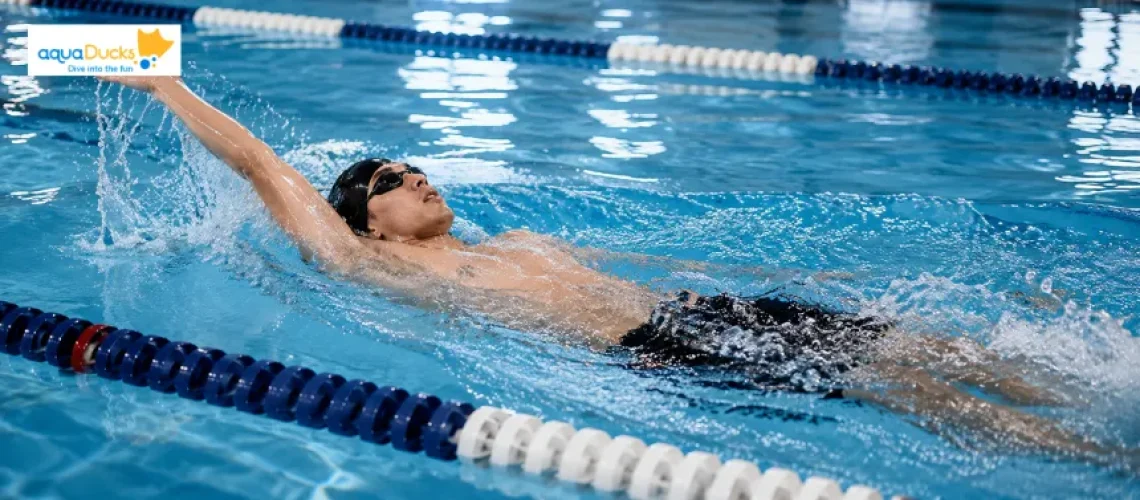
Backstroke is a swimming style performed while lying on your back using alternating arm movements together with a continuous flutter kick.
Unlike freestyle, where swimmers face downward into the water, backstroke keeps the face above the surface most of the time. That makes breathing easier, but it also creates a different challenge, staying balanced and swimming straight without being able to see where you’re going.
The stroke follows a steady rhythm. One arm pulls through the water while the other recovers overhead, and the legs maintain a small continuous flutter kick underneath.
When the stroke flow works well, backstroke feels balanced. But when the posture or kick falls apart, the stroke quickly starts feeling slow and tiring. When you understand how different swimming strokes work, it becomes easier to see why breaststroke feels more technical, yet more rewarding once you get it right.
Key Benefits of Backstroke Swimming
Backstroke is not only useful for competitive swimmers. It’s also one of the most practical strokes for fitness, endurance, and long-term swimming comfort.
- Easier Breathing: Because your face stays above water, breathing feels natural and less stressful, especially for beginners.
- Improves Body Awareness: Backstroke builds better stroke stability, posture, and coordination, helping swimmers understand how their body moves in the water.
- Low Impact Exercise: The smooth, continuous movement reduces pressure on joints like knees, hips, and shoulders, making it ideal for regular training.
- Builds Cardiovascular Fitness: Even at a steady pace, backstroke provides a full-body cardio workout that helps improve endurance over time.
- Helps Correct Poor Posture: For many adults in Singapore who sit for long hours, backstroke strengthens the upper back and supports better spinal alignment.
- Suitable for Different Ages: Children, adults, and older swimmers can all learn backstroke comfortably since the pace can be adjusted to individual fitness levels.
In Singapore, backstroke fits well into everyday swimming, whether for fitness laps, light training, or relaxed pool sessions.
For beginners, structured private swimming lessons in Singapore help swimmers learn backstroke in a safe and supportive environment while building confidence step by step.
Backstroke Swimming Technique: Step-by-Step Breakdown
Backstroke technique works best when everything flows together smoothly. Trying to force speed too early usually makes the stroke harder, not faster.
1. Body Position
Good body position makes the biggest difference in backstroke. Your body should stay long, flat, and close to the surface of the water. Your ears remain slightly underwater while your eyes look upward toward the ceiling.
One of the biggest beginner mistakes is lifting the head forward to look at the feet. The moment that happens, the hips and legs start sinking. Instead, keep your neck relaxed and your chest open. A stable body position helps the entire stroke feel lighter and more consistent.
2. Arm Stroke
Backstroke arms move in an alternating pattern. As one arm exits the water near the hip, the opposite arm enters above the head. Your hand should enter the water cleanly with the little finger first before rotating into the pull underwater. The underwater pull follows a curved motion alongside the body before finishing near the hip again. Many swimmers rush the arm movement too much in the beginning. Efficient, controlled strokes work far better than fast, uncontrolled ones.
3. Flutter Kick
The flutter kick in backstroke is similar to freestyle. Your legs perform small, continuous up-and-down kicks starting from the hips rather than the knees. The movement should stay compact and comfortable instead of creating huge splashes. A common mistake is bending the knees too much, creating a bicycle-like movement that slows the swimmer down. Small, fast kicks usually work better than large, powerful kicks.
4. Body Rotation
Backstroke is not completely flat. Your shoulders and hips rotate gently from side to side during each arm cycle. This rotation helps the arms move more naturally and reduces unnecessary strain. Without rotation, the stroke often feels stiff and tiring. The movement should feel efficient and stable, not exaggerated.
5. Breathing
One major advantage of backstroke is the breathing pattern. Since your face remains above water, you can breathe naturally throughout the stroke. But many swimmers still accidentally hold their breath when focusing too hard on technique.
Steady, loose breathing helps maintain coordination and prevents unnecessary tension. A simple breathing flow often makes the stroke feel much easier during longer swims.
Common Backstroke Mistakes and the Simple Fixes That Actually Help
Almost everyone makes mistakes when learning backstroke. It’s completely normal. The stroke looks simple, but once you’re on your back, small issues in position, balance, and timing show up quickly. Most problems come from a few common habits, and they’re easy to fix once you notice them.
- Sinking Legs: This usually happens because the head is lifted too far forward or the kick becomes inconsistent. Keep your head tension-free and still, looking upward, and maintain small, steady flutter kicks to help your hips stay up.
- Swimming Crooked: Drifting into the lane ropes is very common because you cannot see where you’re going. Use ceiling markers, lane lines, or backstroke flags to stay aligned and maintain proper body alignment.
- Overkicking: Many beginners kick too hard, thinking it will make them faster, but it actually creates more fatigue. Keep your kick small, light, and consistent instead of forcing power.
- Arms Crossing the Centre: When your hands cross over the middle of your body, you lose body control and start to drift. Make sure each hand enters in line with its own shoulder for a straighter, more stable stroke.
- Bent Knees During Kick: Too much knee bend creates drag and slows you down in the water. Kick from the hips with loose ankles and only a slight bend in the knees.
- Holding the Breath: Even though breathing is easy in backstroke, swimmers often forget to breathe naturally. Stay calm and keep your breathing steady instead of holding tension in your chest.
Most of these mistakes are not about strength, they are about timing and body awareness. Once your flow improves, backstroke starts feeling more effortless and easier than it did at the beginning.
Training Drills to Improve Your Backstroke
Backstroke improves fastest when you isolate one skill at a time instead of trying to fix everything together. Slowing the stroke down helps you build better control, timing, and efficiency.
- Back float kick drill: Float on your back with your arms relaxed or holding a Swimming board, then practice a steady flutter kick. This helps improve body stability and teaches you to stay long and flat on the surface. If your hips sink here, they will sink during full strokes as well.
- Single arm backstroke: Swim using one arm while the other stays still at your side. This slows the stroke down and helps you focus on correct arm movement and better body rotation.
- Six kick rotation drill: Rotate onto your side and perform six flutter kicks, then switch sides. This builds balance and teaches smooth body rotation so your stroke feels less flat and more connected.
- Streamline push-off: Push off the wall in a tight streamline position and hold it briefly before starting your stroke. This helps you carry speed from the wall and improves overall body alignment.
- Stroke count drill: Swim one length and count your arm strokes. The goal is efficiency, not speed. Fewer strokes usually mean better timing, control, and glide.
- Head stability practice: Keep your head still while swimming or kicking. Many swimmers unknowingly move their heads, which affects balance and causes drifting in the lane. A stable head leads to a more controlled stroke.
These drills suit swimmers of all levels, but once a child has mastered the basics, structured coaching becomes the next step. Stroke development lessons in Singapore help young swimmers refine technique, strengthen fundamentals, and build water confidence through progressive training.
Where to Learn Backstroke in Singapore
Learning backstroke alone is possible, but most swimmers improve faster once a coach helps correct the small technique mistakes that are difficult to notice yourself.
Structured swimming lessons help swimmers:
- improve posture and body position
- develop a stronger kicking technique
- learn efficient arm timing
- build confidence in deeper water
- avoid long-term bad habits
Many swimming schools in Singapore offer beginner, intermediate, and stroke development programmes for both children and adults. A structured learning environment usually helps swimmers progress faster and feel more comfortable in the water.
Conclusion
Backstroke often looks easier than it really is. The challenge is not strength. It’s learning how to stay relaxed and connected through the entire stroke.
Most backstroke problems improve once the stroke flow and posture start coming together. Small corrections in head position, kicking rhythm, or rotation can completely change how the stroke feels. The best way to improve is to stay patient, practise consistently, and focus on one adjustment at a time instead of rushing the process.
Once the coordination clicks, backstroke becomes one of the smoothest and most enjoyable strokes in the pool.
FAQs
1. Is backstroke good for beginners?
Yes. Many beginners find backstroke easier to start with because breathing feels natural with your face above water. It also helps build confidence in the pool without the stress of timing your breath.
2. Why do I keep drifting sideways in backstroke?
This usually happens when your arms cross the centre line, or your body rotation is uneven. It makes you lose stroke stability and slowly drift off course in the lane.
3. Is backstroke slower than freestyle?
Yes, freestyle is generally faster than backstroke. Backstroke focuses more on control, rhythm, and steady movement rather than speed.
4. Why do my legs sink during backstroke?
This usually happens when your head is lifted too high or your kick becomes inconsistent. A relaxed head position and steady flutter kick help keep your body balanced near the surface.
5. Can backstroke improve posture?
Yes. Backstroke helps strengthen your upper back and shoulder muscles. Over time, it supports better spinal alignment and improves posture.
6. How often should I practise backstroke?
Two to three sessions per week are enough for steady improvement. It gives your body enough time to learn the proper movement sequence. Consistent practice helps your stroke feel more controlled. Over time, you’ll also build better confidence in the water.