
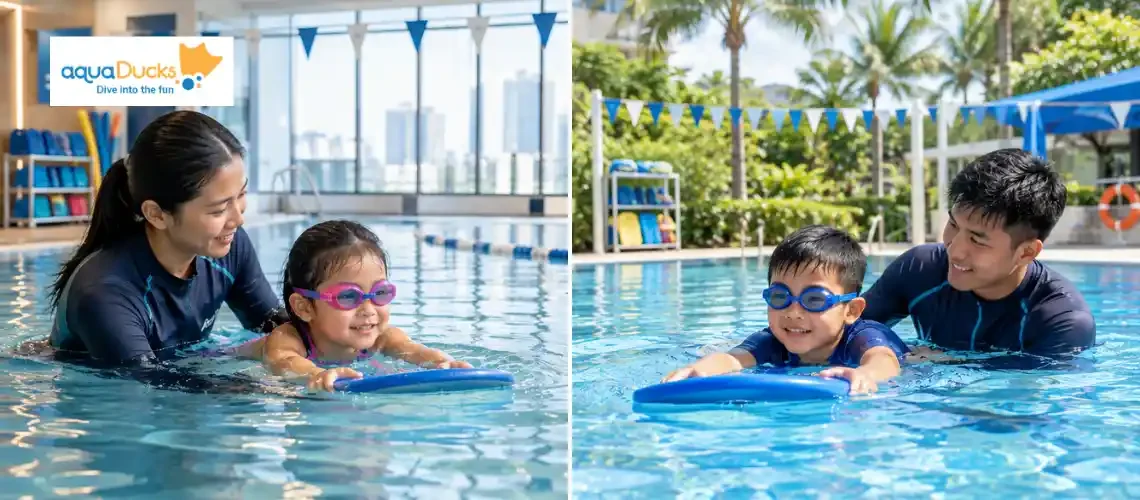
If you’re comparing an indoor vs outdoor pool for swimming lessons, here’s the short answer. For babies, toddlers and beginners in Singapore, an indoor heated pool is usually the better choice. The water stays warm and more consistent, and lessons are less likely to be disrupted by thunderstorms. That’s especially helpful in Singapore, where sunny weather can quickly turn stormy. Outdoor pools can still suit confident swimmers and families who prefer open-air swimming or want a more affordable option.
When comparing indoor vs outdoor pools in Singapore, many parents assume outdoor lessons will be more fun. For confident swimmers, that can be true. But beginners need time and regular practice to master each skill. Cold water or weather-related cancellations can interrupt that progress. Here are five key differences to consider when choosing a pool for your child.
5 Ways Indoor and Outdoor Pools Differ for Swimming Lessons
1. Water Temperature: Steady Indoors, Changing Outdoors
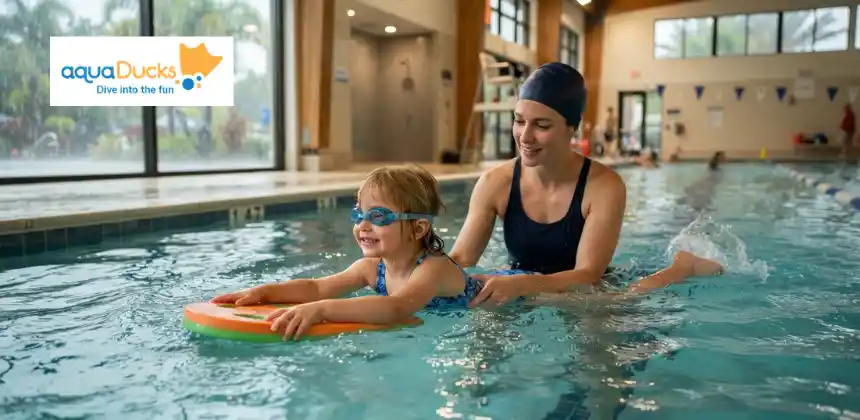
An indoor pool is protected from sun, wind and rain, so its temperature stays steady. A heated indoor pool stays warm all year. That matters most for babies and young kids, because small bodies lose heat faster than adults do.
Outdoor water changes with the weather. It can feel warmer by mid-afternoon and cooler after a heavy downpour.
2. Lightning and Haze: Why Outdoor Lessons Get Cancelled
Singapore has one of the highest lightning rates in the world. The Meteorological Service Singapore records lightning on about 176 days a year. Storms are most common in April to May and October to November, usually in the afternoon or evening.
When lightning is close, outdoor pools clear the water. Public pools here follow official lightning alerts to decide when to close. Swimmers often wait around 30 minutes after the last flash before getting back in, which can cut a lesson short or cancel it.
Haze is the other problem. On days when air quality is unhealthy, health advice is for children to cut down on long or tiring outdoor activity. That can mean fewer outdoor lessons in haze season.
Indoor pools are far less affected by both. Some still pause swimming as a precaution when lightning is very close, so ask your school what its rule is.
3. Chlorine, Salt Pools and What That Smell Really Means
Every pool uses chlorine to keep the water clean. According to the US Centers for Disease Control and Prevention (CDC), that strong “chlorine” smell is usually chloramines. These form when chlorine mixes with sweat, urine and body oils. They can drift into the air and irritate eyes, noses and throats. The CDC notes this happens more often indoors, since indoor pools tend to have less airflow.
So a strong smell usually means a pool needs better water care, better ventilation (fresh air moving through the pool area), or both. A well-run indoor pool shouldn’t smell strong or feel stuffy.
Some schools, AquaDucks included, use salt-chlorinated pools. A salt cell turns dissolved salt into chlorine. Many swimmers find the water feels gentler on their eyes and skin, though it’s cleaned just as well.
4. Sun and Glare: Harder on Young Eyes Than You’d Think
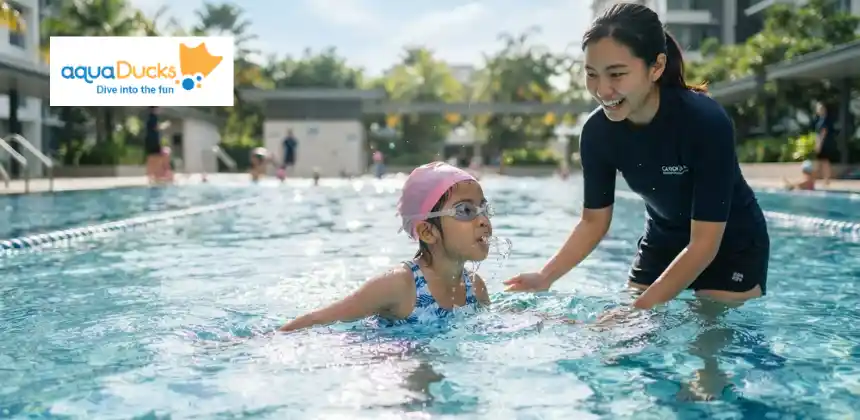
Sunlight bouncing off outdoor water makes it hard for young kids to keep their eyes open during breathing drills. Singapore’s sun is strong, too, and UV levels are usually highest from late morning to mid-afternoon. On longer lessons, sunscreen also needs topping up. Indoors, none of that eats into lesson time.
5. Cost: Cheaper Lessons vs Cancelled Lessons
Outdoor pools cost less to build and run, and lessons at public outdoor pools are often cheaper. The catch is cancellations. Before you sign up, ask whether a rained-out lesson gets a make-up class. A cheaper term loses its value fast if storms take out several lessons with no replacement.
Outdoor vs Indoor Pool: Quick Comparison
| Factor | Indoor pool | Outdoor pool |
| Water temperature | Steady all year, warm if heated | Changes with sun and rain |
| Storms and haze | Lessons usually go ahead | Lessons may pause or be cancelled |
| Chlorine smell | Depends on good ventilation | Drifts away in open air |
| Sun and glare | None | Glare, plus sunscreen top-ups |
| Lesson cost | Often higher | Often lower |
| Best for | Babies, toddlers and beginners | Confident swimmers and open-air practice |
Which Pool Is Best for Your Child?
Age changes this more than anything else.
- Babies and toddlers: Infants get cold fast, and a sudden shower can turn a calm session into a stressful one. A warm, steady indoor pool helps them relax into the water instead of fighting it, with a parent or caregiver right there in the pool at this age.
- Preschoolers and beginners: Between ages 3 and 5, young learners build skills in order: breathing, then floating, then kicking, and missing a few weeks to bad weather can knock a nervous beginner back a step.
By the time kids reach Stroke & Development or Competitive Swim Training age (9 and up), weather has usually stopped being a big deal. They’ve got enough water comfort by then that a cancelled outdoor session is a minor inconvenience, not a setback.
- Adults: For Aquafit or general fitness swimming, it usually comes down to personal preference. Some people like open air. Others want a session that doesn’t depend on the forecast.
AquaDucks has run this progression since opening in 1989, moving children from infant swimming lessons through preschool swimming lessons to Stroke & Development under the guidance of certified coaches. The school also holds an ISSA Pedagogical Pioneer Citation Award and is recognised by ChildSafeguarding.com, two credentials tied to teaching quality and child safety specifically, not just years in business.
Conclusion
For most children learning to swim in Singapore, an indoor pool is the better bet. The water stays warm, storms rarely cancel lessons, and conditions feel the same every week. Outdoor pools still have a place, especially for confident swimmers and families watching their budget.
The easiest way to decide is to see a pool in person. AquaDucks’ indoor, heated, salt-chlorinated pools keep lessons on track through Singapore’s rain and haze, with a programme shaped around its climate.
Book a trial lesson at your nearest AquaDucks pool and see how your child settles into the water.
FAQs
Does chlorine in indoor pools cause breathing problems in kids?
It can, but mainly in poorly run pools. The usual cause is chloramines building up in stuffy air, which can irritate the eyes, nose and throat. If your child often coughs after lessons, ask the school about ventilation. See a doctor if the cough keeps coming back.
Is outdoor swimming in Singapore’s sun safe for kids?
Yes, with the right protection. If you can, book outdoor lessons outside the midday UV peak, when the sun is gentler on young skin. A rash guard, which is a snug long-sleeved swim top, plus water-resistant sunscreen goes a long way.
Is a heated pool necessary in Singapore?
No, but it helps young kids a lot. Even in the tropics, a long lesson in cooler water can leave a small child shivering, and a shivering child tenses up and finds floating harder. Warm water helps them relax. Confident older swimmers usually manage fine either way.
Can my child switch from indoor to outdoor lessons later?
Yes. The skills are the same in any pool, so nothing has to be relearned. Expect the first few outdoor sessions to feel a little different, with glare, wind and water that may be warmer or cooler than your child is used to.
Is a salt-water pool better than a chlorine pool?
Many swimmers find it more comfortable, but a salt-water pool is still a chlorine pool. The salt cell simply makes the chlorine on site. The water is also only about a tenth as salty as the sea, so it doesn’t taste or feel like a swim at the beach.