
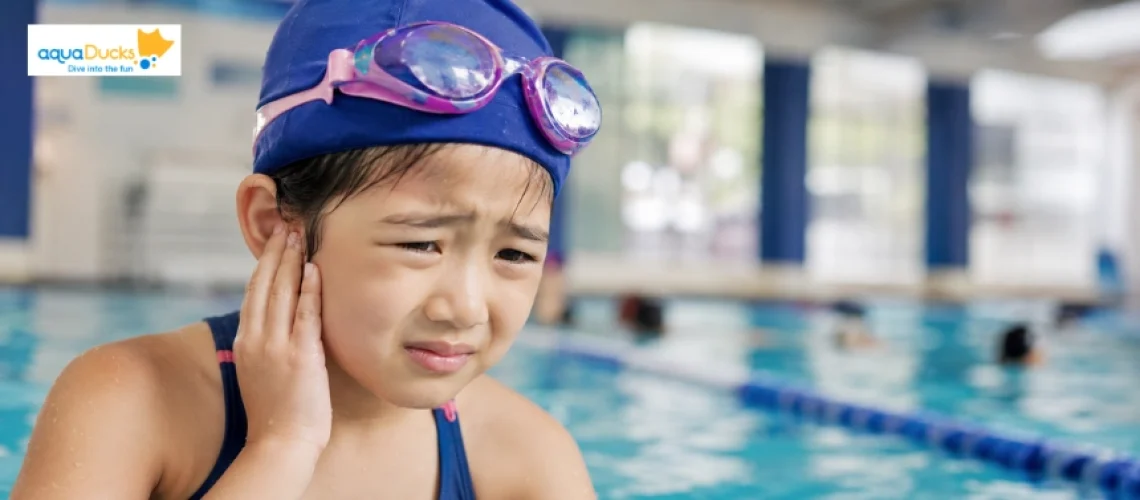
Your child tugs at their ear right before swim class, and your stomach drops. Or maybe it’s you. That ache after a pool session just won’t go away, and now you’re standing at the edge of the pool, not sure what to do next.
It’s a common worry here in Singapore, where weekly swim lessons and condo pool sessions are a standard part of life. Nobody wants to miss a class over nothing, but nobody wants to make an ear infection worse either.
Can you swim with an ear infection, or is it safer to sit this one out? By the end of this, you’ll know exactly what’s safe, what’s not, and how soon you can get back in the water.
Can You Swim With an Ear Infection?
In most cases, no, not while the infection is active. If your ear is infected, swimming can make things worse instead of better.
Here’s why. Water sitting in an already inflamed ear canal creates a warm, stagnant space where bacteria thrive. That trapped moisture delays healing and can turn a mild, easily treatable ache into a longer, more painful infection.
But before you cancel every swim class this month, it helps to know that not all ear pain means infection. Sometimes it’s just pressure from a cold or seasonal allergies, and that’s a very different situation.
So before deciding what’s safe, the first step is figuring out whether what you’re feeling is actually an infection, and how to tell.
Signs of an Ear Infection in Kids and Adults
Sometimes it’s obvious your ear is infected. Other times, it sneaks up as mild discomfort that gets worse over a day or two.
Common Signs
- Pain, especially when pulling or pushing on the outer ear
- Redness or swelling at the ear canal opening
- Fluid draining, clear, yellowish, or blood-stained
- Muffled hearing or a clogged feeling
- Fever, dizziness, or loss of balance
In Younger Kids, Also Watch For
- Constant tugging, scratching, or rubbing at the ear
- Extra fussiness or crying, especially at bath time
- Waking up crying or refusing to lie flat, lying down can increase pressure in the middle ear
- Clumsiness or stumbling
See a doctor if: there’s fever, fluid drainage, severe pain, or symptoms lasting more than 48 hours. It’s always better to check early than wait it out.
What Type of Ear Infection Do You Have? (Safe vs. Not Safe)
Not every ear infection follows the same rules, and advice can vary depending on how severe it is, so this is a general guide, not a replacement for what your own doctor tells you.
1. Outer Ear Infection (Swimmer’s Ear)
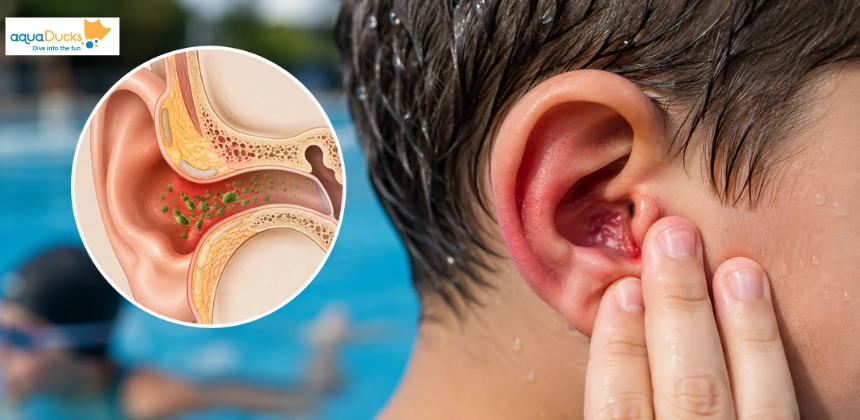
This is the most common one, especially for kids and adults who swim often. Water gets trapped in the ear canal, breaking down the skin’s natural defences and letting bacteria multiply.
- Rule: Most doctors recommend avoiding swimming until it’s treated
- Why: More water can fuel bacterial growth and worsen swelling and pain
2. Middle Ear Infection
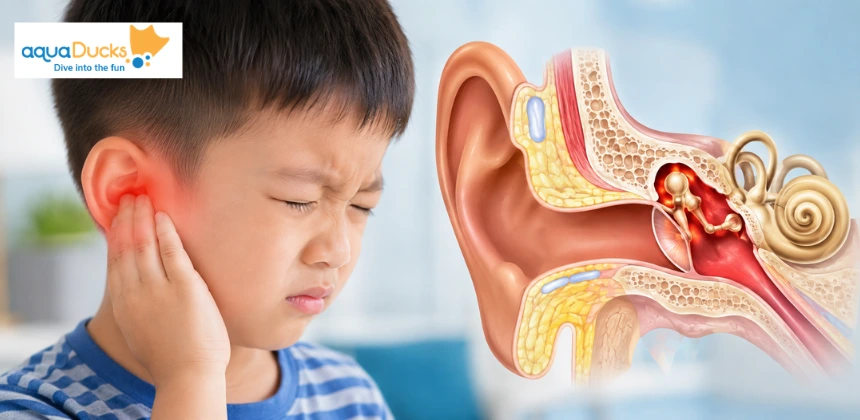
This one sits behind the eardrum, and it’s especially common in kids after a cold. Guidance here varies quite a bit depending on how inflamed the ear is, some doctors are fine with light swimming, while others advise waiting it out. Diving or forceful submersion is generally the bigger concern, since sudden pressure changes can be uncomfortable or, in some cases, risky for an already inflamed ear.
- General guidance: Diving or submerging the head is often discouraged with an active middle ear infection, though this can vary
- Why: The middle ear is already under some pressure, and rapid pressure changes can increase pain, though the actual risk level depends on the individual case
- Best step: Check with your doctor before deciding what’s okay for your specific situation
3. Ruptured Eardrum or Ear Tubes (Grommets)
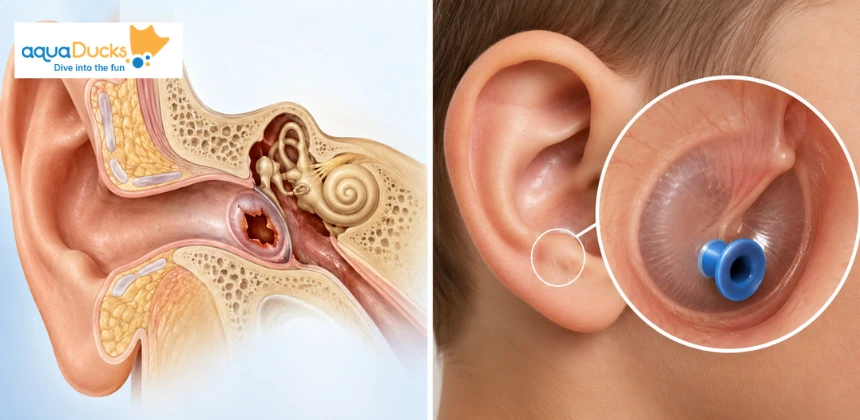
If your eardrum has a tear, or if your child has ear tubes fitted, opinions here genuinely differ among doctors, and the two situations aren’t quite the same.
- General guidance: Ask your doctor or ENT what’s appropriate for your specific case, this varies more than people expect
- Why caution matters: A perforated eardrum can allow water to reach the middle ear, so swimming advice should come from your doctor or ENT. With ear tubes, routine ear protection isn’t usually necessary for clean, treated water, but your child’s doctor may recommend precautions based on their individual situation
When Is Ear Discomfort Okay for Swimming?
If the discomfort isn’t an infection, just mild pressure from allergies or a stuffy nose, swimming is often fine with a few sensible adjustments:
- Keep your head above water where possible
- Skip diving or jumping in, since sudden pressure changes can turn mild discomfort into real pain
- If pain increases at any point, get out and stop for the day
Does It Matter Where You Swim in Singapore?
Yes, and where you swim can matter almost as much as whether you swim at all, though how cautious you need to be still depends on your specific situation.
Chlorinated and Salt-Chlorinated Pools
Swim school and condo pools generally fall into this category, and they’re usually considered a safer choice if you’re being cautious because proper chlorination keeps bacteria levels low. At AquaDucks, our indoor heated pools are salt-chlorinated, providing a well-managed environment for swimming lessons. However, pool safety still depends on proper water-quality management, which is particularly important when an ear is recovering.
Natural Open Water (Sentosa, East Coast Park)
The sea at Sentosa or East Coast Park is a different environment, swimming in it can expose your ears to microorganisms that aren’t controlled by pool disinfection. If you’re recovering from an ear infection, it’s usually best to stay out of open water until you’ve recovered, or until your doctor says it’s safe.
Hot Tubs and Jacuzzis
Warm, still water is an easy environment for bacteria to multiply in, which makes hot tubs and condo jacuzzis higher-risk for an ear that’s already irritated. It’s generally best to skip these while healing, though your doctor is the best judge of when it’s fine to return.
Why Does Swimming Cause So Many Ear Infections in Singapore?
It comes down to a mix of anatomy and our local weather.
Every time you swim, a little water gets into the ear canal. Normally, it drains out on its own. But if the ear canal is narrow or has extra earwax buildup, that water gets trapped.
According to HealthHub Singapore, our year-round hot, humid climate makes this worse. High humidity slows down how quickly trapped water evaporates, giving bacteria a longer window to multiply.
Two everyday habits make this more likely too:
- Cotton swabs don’t just push wax deeper, they create tiny scratches in the delicate skin lining the ear canal, and those micro-scratches act as an open door for bacteria
- Chlorine exposure can dry out and irritate the ear canal’s protective skin barrier, making infection easier to take hold
Preventing these infections isn’t about avoiding the water forever, it’s about knowing how to dry and protect your ears the right way, which is exactly what we’ll cover next.
How to Prevent Ear Infections From Swimming
During Recovery
- Wear well-fitted earplugs and a swim cap if your doctor says light water contact is okay.
- Dry your ears gently after any water exposure. A soft towel works, and a hair dryer on the coolest setting held a few inches away can help too.
- Follow your doctor’s instructions for the full course of any prescribed treatment, and ask when it’s safe to return to swimming.
- Recovery time varies quite a bit from person to person, there’s no single timeline that fits everyone. Rather than counting days, the safest approach is to wait until symptoms are fully gone and confirm with your doctor before getting back in the water.
A quick caution: Don’t use over-the-counter ear-drying drops if you have ear tubes, a perforated eardrum, swimmer’s ear, or ear drainage, unless your healthcare provider specifically recommends them. Stick to gentle towel drying and check with a doctor before swimming again.
Long-Term Habits
Once you’re fully healed, a bit of routine care goes a long way in keeping ear infections from coming back.
- Dry your ears properly after every swim. Don’t just towel off and forget about it.
- Wear earplugs regularly if you or your child tend to get ear infections often.
- Leave earwax alone, it’s there to protect your ear, so skip the cotton swabs.
- Manage allergies or a stuffy nose early, since congestion can make ear infections more likely.
- Choose clean, well-maintained pools whenever you can.
Small habits like these are usually enough to keep your ears happy and your swim schedule uninterrupted.
What to Do While You Wait
Sitting out for a week or two doesn’t have to mean falling behind, and it definitely doesn’t have to mean sitting at home bored.
If your child usually attends swim lessons, they can still come along and watch from poolside. Being there keeps them engaged with the class and their friends, even if they’re not in the water themselves. It also helps them feel less like they’re missing out, which matters more than it sounds.
This is also a good time to focus on things that don’t need a pool at all, like dry-land coordination and technique drills, or just going over what they’ve learned so far. At AquaDucks, we know a short break shouldn’t mean losing progress, so make-up sessions are always an option once your child is cleared to swim again. If they need a bit of extra catching up, private swimming lessons can also help them get back on track quickly, with a coach’s full attention on exactly what they need.
And if it’s you, the adult swimmer, taking a short break, the same idea applies. Use the time to rest properly, and treat it as a pause, not a full stop.
You’ll be back in the water soon enough, and your ears will thank you for waiting it out properly.
Conclusion
Swimming with an ear infection usually isn’t worth the risk, but it’s rarely a reason to panic either. Once you know what type of infection you’re dealing with, the right next step becomes a lot clearer.
A few days of rest, some proper ear drying, and a check-in with a doctor if things don’t improve, that’s often all it takes to get back to normal. And once you’re cleared, there’s nothing stopping you from jumping right back into the pool.
If your child has to miss a class or two, don’t worry about it too much. Progress in swimming isn’t lost over a short break, and at AquaDucks, we’re always happy to help arrange a make-up session so they can pick up right where they left off.
Got questions about your child’s specific situation, or want to check what class works best once they’re back in the water? Message us on WhatsApp, our team is happy to help you figure out the safest way forward.
FAQs
Can babies or toddlers swim with an ear infection?
It’s best to wait. Babies and toddlers are more prone to middle ear infections, and they can’t tell you if the pain is getting worse. Most doctors recommend keeping little ones out of the pool until a paediatrician gives the all clear.
Is it safe to swim with a popped eardrum?
No, not without special protection. A popped, or ruptured, eardrum leaves a direct opening to the middle ear, so regular swimming should wait until a doctor confirms it has healed.
Do earplugs actually work for preventing ear infections?
Yes, when they fit properly. Well-fitted silicone earplugs keep most water out of the ear canal, which cuts down the moisture that bacteria need to grow. A good fit means no gaps and no discomfort when pressed in gently. If it falls out easily or lets water in during a quick test at home, it’s not the right size. Custom-moulded plugs from an audiologist are worth it if you or your child get ear infections often.
Can swimming in the sea cause an ear infection faster than a pool?
Swimming in natural water can expose your ears to microorganisms that aren’t controlled by pool disinfection. If your ear is already infected or healing, it’s sensible to avoid open-water swimming until you’ve recovered or your doctor says it’s safe.
Is it okay to shower with an ear infection?
Usually yes, showering is fine. Just try to keep water from running directly into the ear. A quick rinse with your head tilted away from the water, followed by gentle drying, is usually enough.
If only one ear is infected, can I still swim with the other ear submerged?
It’s safer to protect both ears, even the healthy one. Water exposure won’t cause a new infection instantly, but keeping both ears dry with earplugs reduces the risk while the infected ear heals. If you’re already wearing plugs for the infected side, it makes sense to just plug both and avoid the guesswork entirely.