
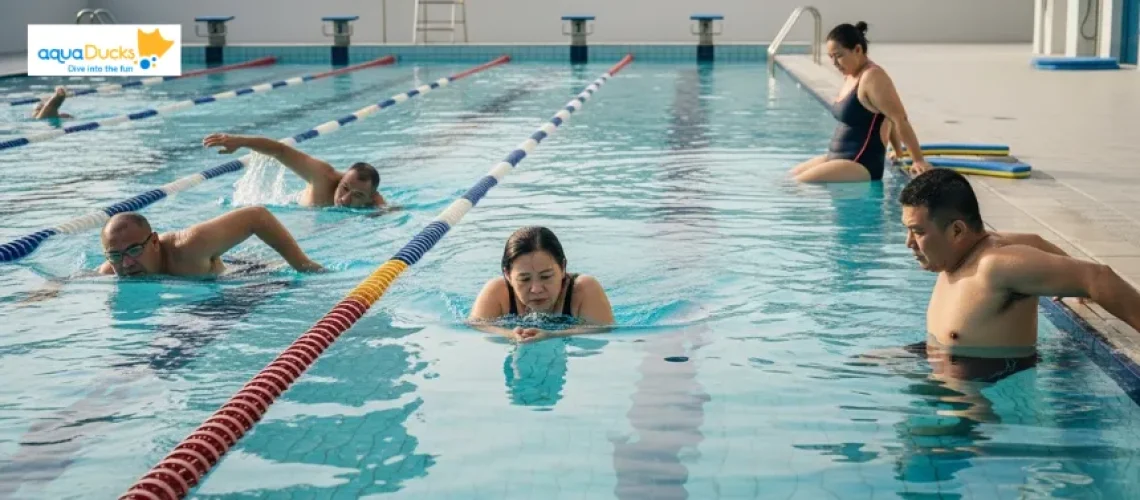
You start thinking about swimming because it seems like one of the easiest ways to lose weight. No heavy pressure on your joints, no exhausting workouts in the heat, just a calm swim and you’re done. It feels simple enough that it almost makes you wonder why everyone isn’t doing it.
But once you actually start, a question usually comes up. If swimming is this easy and comfortable, does it really help you lose weight?
That’s where the confusion begins. Some people say swimming burns a lot of calories and is great for fat loss, while others feel like they’ve been swimming for weeks without seeing any change. So what’s actually true?
In this guide, we’ll break down how swimming really affects weight loss, what kind of results you can realistically expect, and the common mistakes that stop many people from seeing progress.
Can Swimming Lose Weight?
Honestly, yes, and more than most people expect. In just one hour, swimming can burn anywhere between 400 and 700 calories, depending on how hard you push. That’s close to what you’d burn on a jog or a bike ride, except your body feels completely fine when you get out of the pool.
The people who swim regularly and still don’t lose weight usually have one thing in common. They’re not paying attention to what they eat after the session. You can burn 500 calories in the water, but if you come home and eat a big meal without thinking about it, that burn is basically gone. Swimming does its job well. It just works better when you’re a little mindful of what goes into your body outside the pool too.
How Swimming Helps You Lose Weight
Swimming feels easy, but your body is actually working hard the whole time. That’s because water is thicker than air, so every move you make takes real effort. Every kick, every pull, your muscles are pushing against the water the entire time.
What makes swimming good for weight loss is that your whole body is involved at once. Running is mostly legs. Cycling is mostly leg work. Swimming engages your arms, shoulders, back, core, and legs all together, which means more muscles firing and more energy being used with every single session.
Over time, your body also builds lean, toned muscle. And muscle burns calories all day, even when you’re just sitting around. So the more you swim, the more your body works for you even outside the pool.
Many people improve faster with proper guidance, especially when they’re still getting comfortable with technique or want more structured progress through swimming lessons in Singapore.
How Much Weight Can You Lose by Swimming?
Let’s be honest, there’s no fixed number. It depends on how often you swim, how hard you work, and what the rest of your day looks like. But here’s a rough idea.
Someone around 70kg burns about 450 to 500 calories in one hour of swimming. Do that four times a week, and you’re burning close to 2,000 calories just from swimming. For most people, that works out to roughly one kilogram lost every four weeks.
Here’s what the journey usually looks like:
Month 1 — Don’t stress if the scale doesn’t move. Your body is still getting used to the exercise and building muscle. Since muscle weighs more than fat, the number might stay flat or go up slightly. This is completely normal. Keep going.
Months 2 to 3 — This is where you start actually seeing changes. Most people notice it around the waist first, then the arms and face. Losing two to four kilograms here is realistic for most people.
Month 6 onwards — By now, the difference is clear. Energy is better, clothes fit differently, and people who stay consistent are often down five to eight kilograms.
These numbers are not guaranteed, but they are realistic for someone who swims regularly and stays committed.
Best Swimming Strokes for Weight Loss
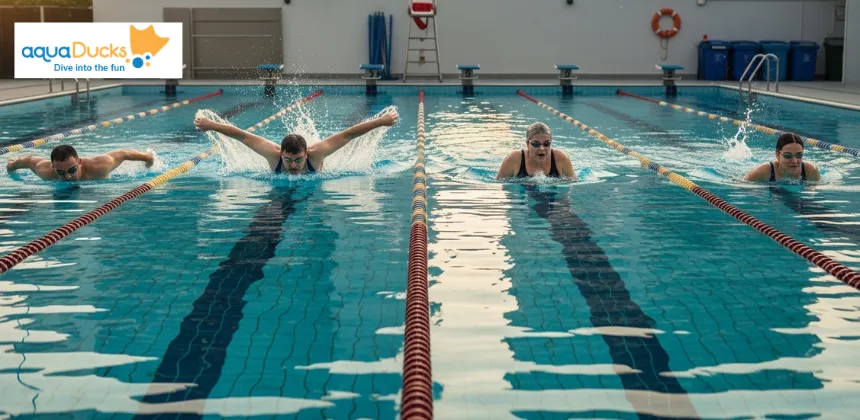
Not all strokes are the same. Some burn more calories than others, and understanding swimming strokes helps you see why they matter for weight loss.
Freestyle is the go-to stroke for losing weight. It burns 500 to 650 calories per hour; you can keep it going for a full session, and you naturally cover more distance because it’s the fastest stroke. Most people make freestyle their main stroke when swimming to lose weight.
If you want to know how to swim freestyle properly, check out our step-by-step guide for beginners to help you get started.
Butterfly burns the most calories, close to 700 per hour, but it’s really tiring. Just do it for a little bit when you feel ready.
Breaststroke is what most beginners start with. It’s easy to learn and doesn’t stress your body much. It burns a little less than freestyle, so just swim a bit longer to make up for it.
Backstroke is basically your rest stroke. Use it when you need a breather between harder sets but still want to keep moving.
Once you get comfortable with the strokes, pairing swimming with other activities can improve your results even more. Simple things like strength training at home two or three times a week, a 30-minute walk after dinner, or some light stretching go a long way.
And if you enjoy being in the water, aqua aerobics is worth trying alongside your regular swim sessions. It keeps you moving in the water on your off days and helps you burn extra calories without feeling like you’re doing a hard workout. Aquaducks, a swimming school in Singapore, offers AquaFit water exercise classes for adults and seniors of all fitness levels. It combines cardio, strength, and movement in a single water session, so your body stays active without stressing your joints.
Why You’re Not Losing Weight From Swimming
If you’ve been swimming regularly and nothing is changing, one of these is probably why.
- You’re eating more than you think. Swimming makes you really hungry. So you grab a snack after the pool, eat a bigger dinner, and without realising it, you’ve eaten back most of what you burned. Just paying a little more attention to what you eat after swimming can make a big difference.
- Your sessions are too easy. If you’re swimming slowly with long breaks, your body isn’t really working that hard. A good session should feel like actual work. Try resting less between laps or swimming a little faster during parts of your session.
- You’re doing the same thing every time. Your body gets used to things fast. Same stroke, same speed, same distance every session, and it stops being a challenge. Mix things up every few weeks to keep your body working harder.
- You’re not swimming enough. Once a week is not enough to see real change. Try to swim three to four times a week. If you’re short on time, two hard-focused sessions are always better than four easy ones.
Tips to Swim Smarter in Singapore
- Go early or late: Before 9 am or after 6 pm is the best time to swim. It’s cooler, less busy, and way more enjoyable than swimming in the hot midday sun.
- Use public pools: Singapore’s public pools are clean, cheap, and easy to find near where you live. Try going on weekday mornings for the best experience. The lanes are almost empty, and you can focus without any distractions.
- Drink water before you get in: A lot of people don’t know this, but you still sweat in the pool even though you can’t feel it. Drink water before you swim, keep a bottle next to the pool, and drink again when you’re done.
- Set a goal before every session: Before you jump in, decide what you want to do. It could be 20 laps, 30 minutes, anything really. Having a goal stops you from giving up early and gives you something to beat next time.
- Track it simply: You don’t need any fancy app or device. Just write down how long you swam and how many laps you did. On the days you really don’t feel like going, looking back at what you’ve already done is usually enough to get you off the couch.
- Eat a bit better on swim days: Try to eat more protein and less junk food on the days you swim. It helps your body feel better after the session and stops you from feeling super hungry afterwards.
Conclusion
Swimming is one of those workouts that actually gets easier and more enjoyable the more you do it. Your body gets stronger, the sessions stop feeling as hard, and the results slowly start showing up in ways you didn’t expect.
Just don’t expect everything to happen in the first few weeks. Progress with swimming is gradual, but it’s real. Show up consistently, push yourself a little each time, and give it enough time to actually work.
If you’re starting from scratch and want someone to guide you properly, Aquaducks offers swimming programmes in Singapore for all ages and fitness levels. Starting with the right guidance just makes the whole thing a lot easier and, honestly, a lot more fun too.
FAQs
1. Is swimming better than running for weight loss?
Both swimming and running can help you lose weight. Running usually burns calories faster and for less time, but it puts more stress on your joints and can be harder to maintain daily. Swimming for weight loss is gentler on the body and works your whole body at once, which makes it easier for many people to stay consistent. In the end, the better option is the one you can stick with long term.
2. Can you lose belly fat by swimming?
Swimming can help reduce belly fat, but it doesn’t target that area directly. Fat loss occurs throughout your whole body, not just in one spot. As you stay consistent and keep your calorie balance in check, overall body fat decreases, and belly fat reduces over time.
3. How long should I swim to lose weight?
Most people start seeing results with around 30 to 60 minutes per session, done about 3 to 4 times a week. What matters more than session length is how regularly you swim and how much effort you put in. Even shorter, focused swim workouts can be effective when done consistently.
4. Does swimming on an empty stomach burn more fat?
Swimming on an empty stomach may slightly increase fat use during the workout, but the overall difference is small. If you feel low on energy while fasted, it’s better to eat something light before your swim so you can perform better and get more out of the session.
5. Why am I not losing weight even after swimming?
This usually comes down to a few things. Your workouts may not be intense enough, you may not be swimming often enough, or your routine hasn’t been consistent long enough to see visible change yet. Results from swimming come gradually, and small adjustments to frequency and effort usually make the biggest difference.