
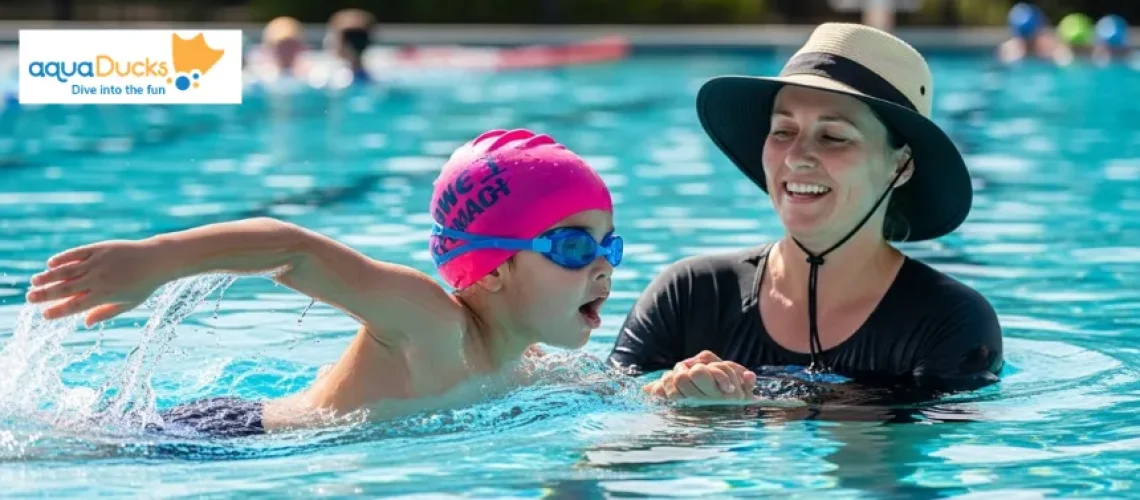
Freestyle swimming can feel challenging for beginners, especially when trying to coordinate arm strokes, kicks, and breathing at the same time. It may not feel natural at first, but with the right approach, it quickly becomes smooth, enjoyable, and easy to learn.
Also known as the front crawl, freestyle is often the first swimming style children and adults learn. In Singapore, where swimming is part of school programmes and everyday life, learning freestyle helps children build confidence, stay safe, and enjoy the water independently.
What is Freestyle Swimming?
Freestyle swimming, also called the front crawl, is a technique where swimmers use alternating arm movements, flutter kicks, and side breathing to move efficiently through the water.
In this guide, you’ll learn how to swim freestyle step by step, from body position and kicking to arm strokes and breathing, so beginners can feel confident and in control in the water.
Essential Swimming Gear for Beginners
You don’t need much equipment to get started, but the right gear makes learning easier and safer:
- Comfortable swimwear that allows full movement.
- Goggles to keep eyes open underwater and make swimming more enjoyable.
- Swim cap, especially helpful for children with longer hair.
- Kickboards for practising balance and strengthening kicks.
Having simple, supportive gear removes distractions and helps children focus on proper technique while feeling secure in the pool.
Step-by-Step Freestyle Swimming Technique
This guide is designed for beginners of all ages, including children and adults learning freestyle swimming. The basic principles of freestyle swimming, including body position, kicking, arm strokes, and breathing, are the same for everyone. While children may learn with playful imagery, adults may focus on relaxation, endurance, and proper adult swimming technique. The steps below work effectively for both.
Before You Start: Get Comfortable in the Water
Before learning freestyle swimming, beginners should feel relaxed in the water. Practice putting your face in, blowing bubbles, and floating on your front. Feeling at ease makes the next steps much easier and safer.
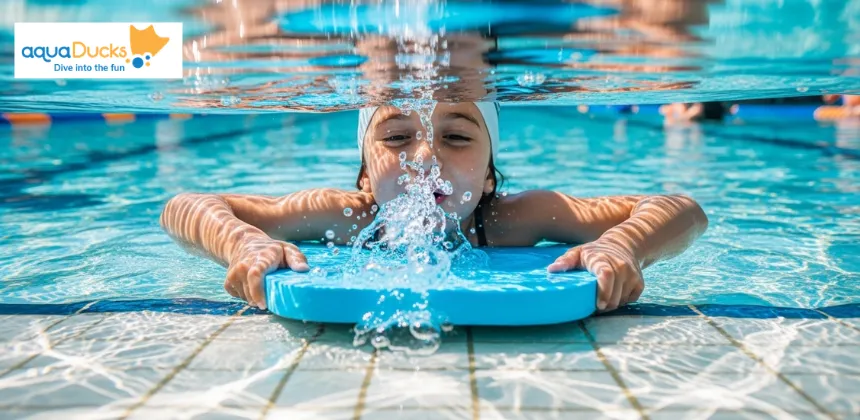
If your child is a complete beginner and isn’t confident in the water yet, consider taking learn-to-swim classes to build basic skills and water confidence before moving on to full freestyle practice.
Step 1: Find the Right Body Position
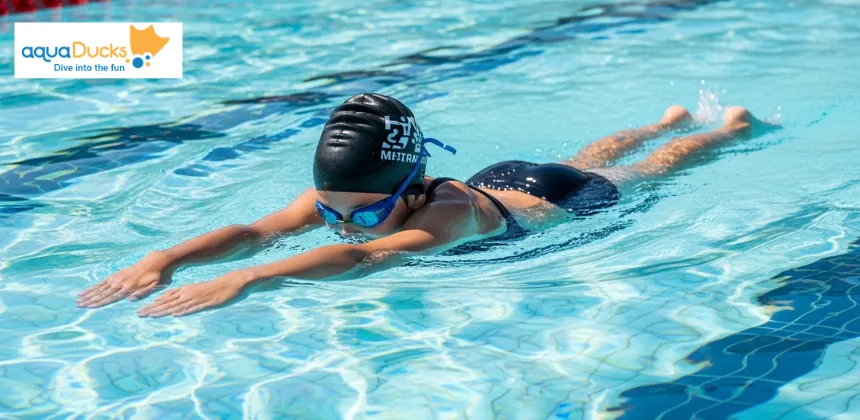
Freestyle begins with balance. Stretch your arms forward and keep your body straight, like an arrow gliding through the water. Look down toward the pool floor instead of forward; this keeps your hips and legs near the surface. Children can imagine themselves as “superheroes flying underwater” to encourage a long, relaxed posture.
Step 2: Add Gentle Flutter Kicks
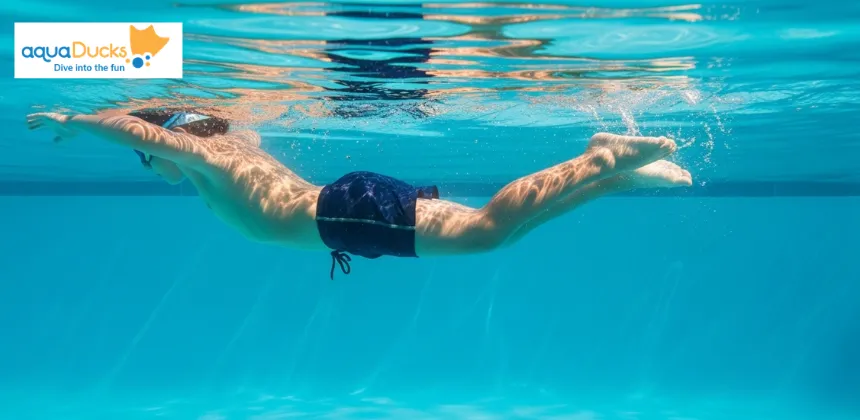
Next comes the kick. Move your legs up and down from the hips using small, quick motions. Keep knees relaxed and aim for small, consistent splashes. Steady, rhythmic kicks help maintain balance and forward movement without wasting energy.
Step 3: Learn the Arm Stroke
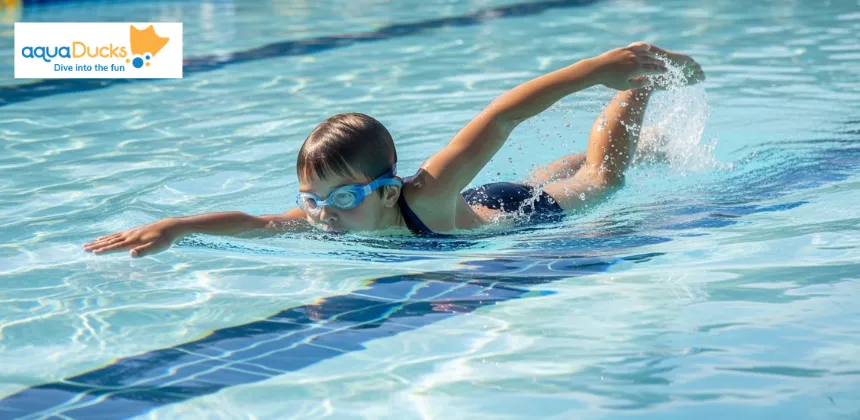
Move each arm in a smooth, continuous cycle. Reach forward into the water, pull your hand back toward your hip, then lift it out and repeat on the other side. Focus on long, controlled strokes rather than fast ones, keeping fingers together and pulling straight back through the water.
Step 4: Turn to the Side to Breathe
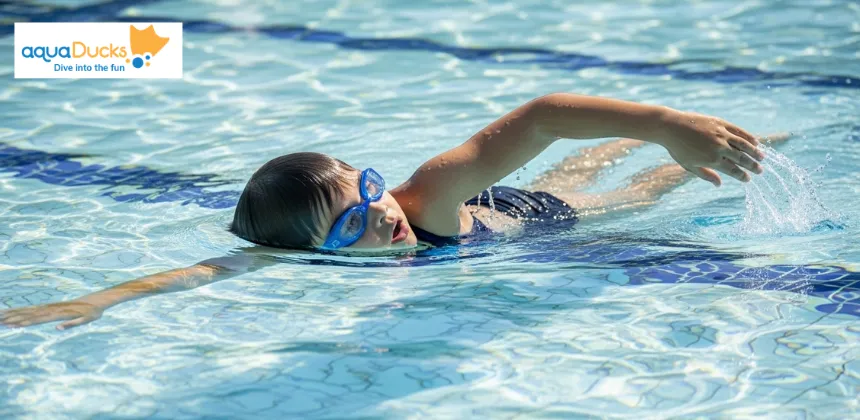
Breathing is often the hardest part for beginners. Instead of lifting your head, gently turn it to the side when one arm comes out of the water. Take a quick breath, then return your face to the water and blow bubbles. Turning the head along with the body helps maintain balance and keeps the legs from sinking.
Step 5: Put Everything Together
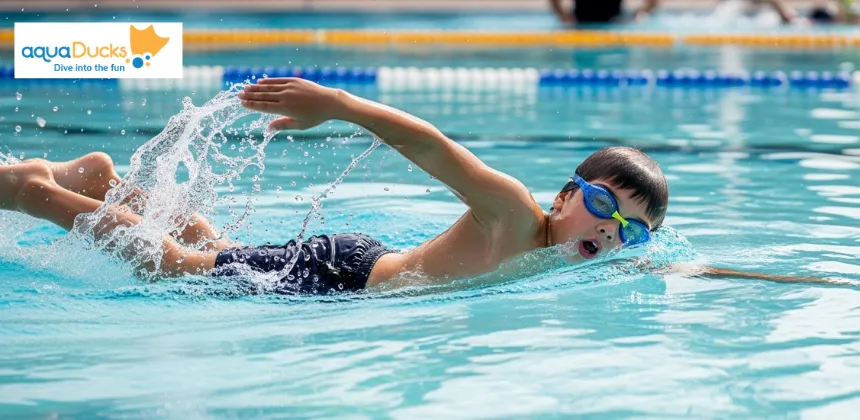
Combine body position, kicking, arm strokes, and breathing into a smooth, repeating motion. Start slowly and focus on rhythm rather than speed. Freestyle swimming for beginners should feel continuous, almost like gliding through the water.
Step 6: Practise in Short, Fun Sessions
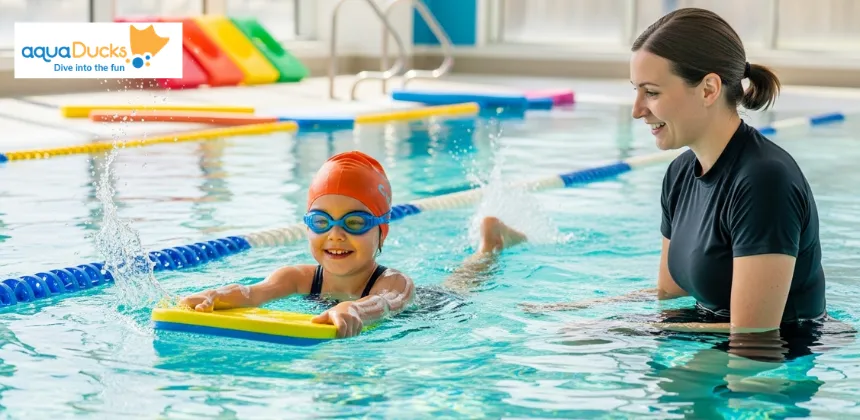
Short, relaxed practice sessions work best. Swim a small distance, take a break, and try again. Frequent rests prevent fatigue and make learning enjoyable. Small, consistent improvements build confident swimmers over time.
Once you’ve got the basics down and want to swim more smoothly and efficiently, consider practising with guidance from stroke development programs at AquaDucks, a leading swimming school in Singapore, to strengthen your technique and coordination.
Tips for Helping Children Learn Freestyle Faster
Learning freestyle is as much about confidence as technique. Here are practical ways to support children while keeping swimming fun:
- Celebrate effort, not perfection
Focus on small wins, completing a lap, maintaining a steady kick, or turning the head to breathe. Praising effort motivates children and builds self-esteem.
- Keep practice playful and short
Turn drills into games or challenges and keep sessions brief (10–15 minutes). Frequent, enjoyable practice prevents fatigue and helps children stay relaxed.
- Break down skills step by step
Practise kicking, arm strokes, and breathing separately before combining them. This helps children master each component without frustration. - Provide gentle guidance and encouragement
Offer feedback calmly and supportively. Children who feel safe and guided are more likely to practise confidently and retain skills.
Conclusion
Every swimmer starts as a beginner. With patience, proper guidance, and consistent practice, learning freestyle becomes natural and enjoyable. Mastering this stroke helps children develop coordination, water confidence, and safety awareness.
Parents who want their children to gain confidence and build skills in the water can consider enrolling them in kids’ swimming lessons in Singapore, where structured practice helps them progress safely and enjoyably. The journey isn’t about swimming perfectly right away; it’s about steady progress, small successes, and growing confidence one stroke at a time.
FAQs
1. How long does it take to learn freestyle swimming?
Many beginners start seeing improvement within a few weeks of regular practice. Progress depends on age, comfort in water, and practice frequency. Consistent short sessions and proper guidance help children learn faster while staying confident and safe.
2. Is it possible for adults to learn freestyle swimming?
Yes! Adults can learn freestyle at any age. With focused lessons and patience, adults can make steady progress just like children. Starting with simple drills and practising regularly helps build coordination and confidence.
3. Should I breathe on both sides (bilateral breathing)?
Breathing on both sides helps balance your stroke and prevents muscle imbalance. Beginners can start by breathing every 3 strokes to get comfortable. Once both sides feel natural, swimming becomes more efficient and less tiring.
4. Why does freestyle feel tiring even if I can float fine?
Even if floating is easy, coordinating breathing with strokes and kicks adds complexity. Beginners tyre because they aren’t exhaling steadily underwater or syncing breath with arm movement yet. Practising rhythmic breathing and staying relaxed can significantly reduce fatigue.
5. Should I practise drills like kicking or breathing separately?
Yes. Practising isolated drills, like kicking with a board or breathing at the wall, helps beginners master each part before combining everything in the water. Breaking down the stroke into smaller steps makes learning freestyle swimming for beginners faster and more enjoyable.