
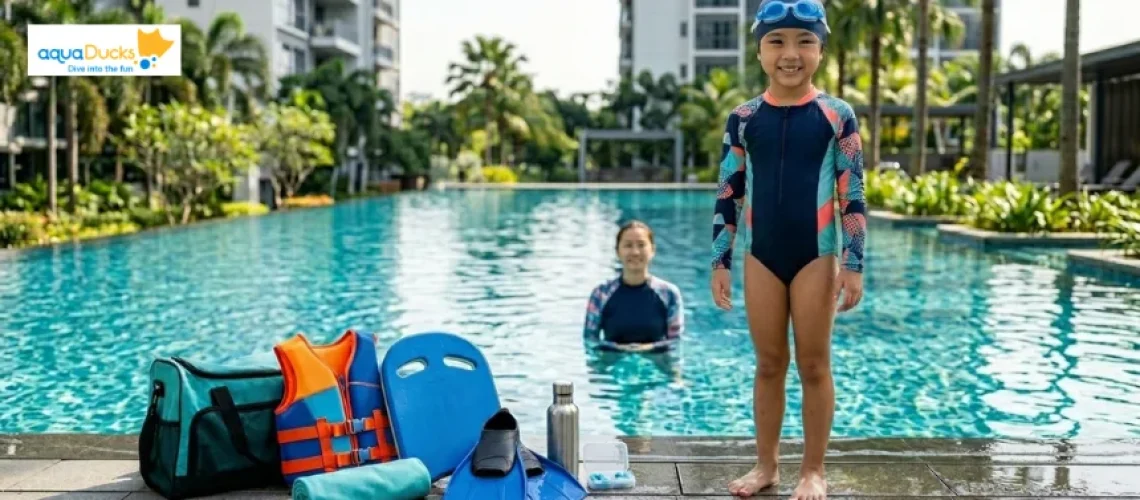
Your child just said yes to swimming lessons. And your first thought after the excitement? Probably something like, okay, what exactly do I need to buy? Most Singapore parents show up to that first lesson with a bag full of guesses. A random pair of goggles from the pharmacy. Beach shorts that balloon up in the water. A swimsuit that was on sale but fits a little too loosely. Then the instructor gently mentions proper gear, and suddenly you’re Googling at the poolside.
Getting the right swimming gear for kids makes a bigger difference than most parents expect. Whether your child is working through their SwimSafer stages or just building confidence in the water, what they wear and carry to every lesson genuinely shapes how fast they learn and how safe they stay.
This guide covers everything, without the jargon. What to buy, and what actually makes a difference when your child is standing at the pool’s edge, ready to jump in.
Essential Swimming Gear for Kids
1. Safety First: The Gear That Keeps Your Child Safe in the Water
No parent stands at the poolside fully relaxed, especially in those early lessons. Knowing what your child actually needs in the water makes that a little easier.
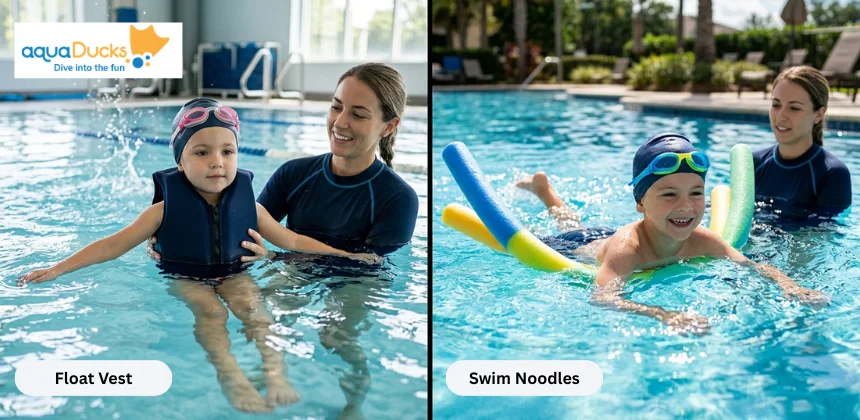
- Float Vest
The best option for young beginners in structured learn to swim lessons. It sits snugly around the chest, keeps your child upright, and leaves their arms completely free. That freedom matters because it lets proper technique develop early rather than just keeping them afloat.
- Swim Noodles
A long foam tube that your child can hold, sit on, or wrap around themselves in the water. It builds water confidence in a relaxed way and makes practice feel more like play than a lesson.
One practical note: Public pools and condo pools have different rules on floatation aids. Always check before you pack.
As your child grows more comfortable, the float comes off gradually. That shift is a big milestone. It means genuine water confidence is building.
2. Swimwear That Actually Works in Singapore’s Heat
What your child wears in the water matters more than most parents think. The wrong swimsuit can slow them down, distract them mid-lesson, and make the whole experience uncomfortable. Here is what actually works.
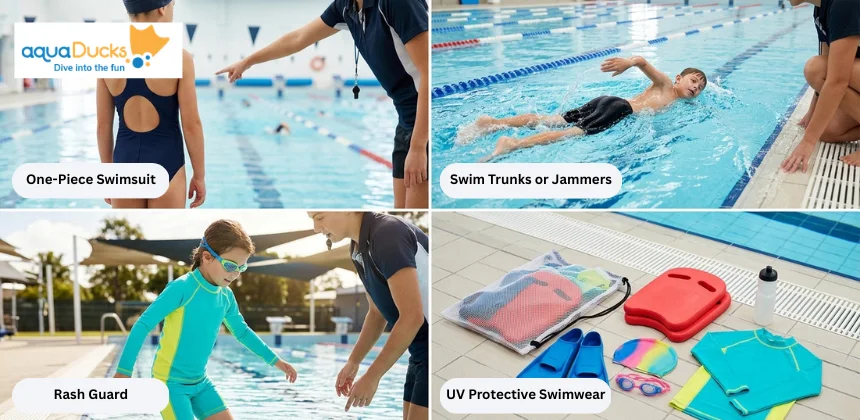
- One-Piece Swimsuit (Girls)
This is the best choice for swim lessons. It stays in place no matter how much your child moves, kicks, or jumps. No adjusting, no shifting, just swimming.
- Swim Trunks or Jammers (Boys)
Baggy beach shorts feel fine on land, but the moment your child gets in the water, they fill up like a balloon and drag them back. Swim trunks or jammers sit close to the body and let your child move the way they are supposed to.
- Rash Guard
Think of this as a light, stretchy shirt your child wears over their swimsuit. It protects their skin from the sun during outdoor lessons and stops irritation from long hours in the pool. It dries so fast that your child will barely notice it is there.
- UV Protective Swimwear
Singapore’s sun is strong all year round. Sunscreen helps but it washes off quickly once your child is in and out of the water. UV protective swimwear gives that extra layer of protection without any extra effort on your end.
Now here is something most parents only find out after buying the wrong thing. Chlorine breaks down regular swimwear surprisingly fast. So when you are shopping, look for polyester or PBT fabrics. They hold their shape, keep their colour, and last much longer than regular swimwear.
3. Goggles: The One Thing Your Child Will Have an Opinion About
Ask any kid what their favourite piece of swim gear is and nine times out of ten the answer is goggles. They love picking the colour, trying them on, and fogging them up before the lesson even starts. And honestly, goggles are also one of the most important things you will buy so let them get excited about it.
Here is what to know before you shop.
- Fit First
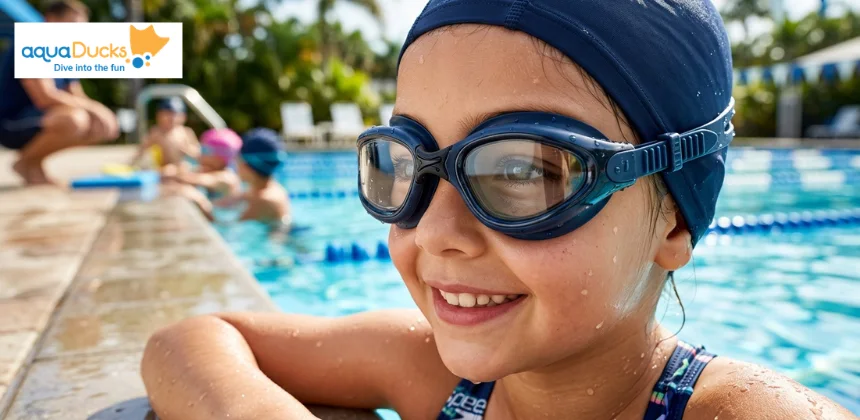
A good pair of goggles should sit gently around the eye socket and create a soft seal without pressing too hard. The easiest way to check is to press them lightly against your child’s face without the strap on. If they stick for a second on their own, the fit is right. If they fall straight off, keep looking.
- Anti-Fog Lenses
Kids already have a short attention span in the water. Goggles that fog up every two minutes break that momentum completely. Look for goggles with an anti-fog coating built in. It keeps their vision clear and keeps the lesson moving.
- Tinted or Clear Lenses
Clear lenses work well for indoor pools. If your child swims outdoors, tinted lenses are much more comfortable under bright sun. Some goggles come with UV protection built in too, which is worth looking out for.
- Strap and Nose Bridge
Both should be adjustable. Children’s faces come in all shapes and sizes and a pair that fits perfectly today might feel different in six months as they grow. Adjustable straps and nose bridges mean the goggles grow with them.
Not sure which pair suits your child best? Ask your swim instructor at the next lesson. They see kids in goggles every day and can point you in the right direction in about thirty seconds. Still looking for the best swimming school in Singapore for your child? That is worth sorting before the first lesson.
4. Swim Caps, Earplugs and the Extras That Are Easy to Miss
You have got the swimsuit sorted, goggles picked out, and float vest ready. Here are the smaller things that still make a real difference.
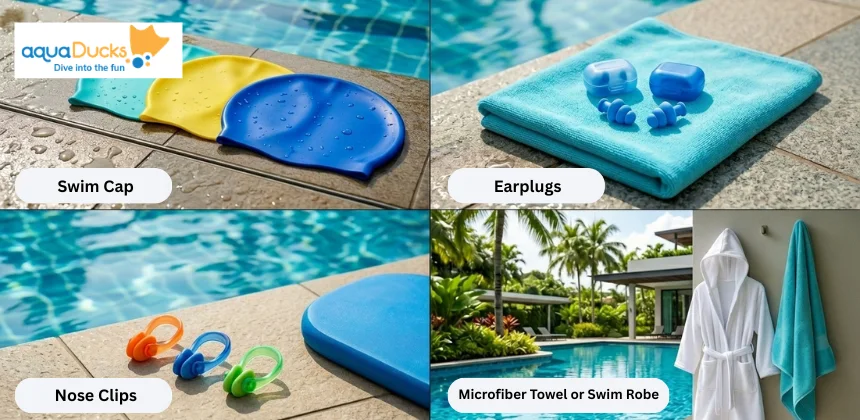
- Swim Cap
If your child has long hair, a swim cap is not optional. Hair in the face during mid-lesson breaks concentration and gets in the way. For shorter hair, it is still worth wearing because it keeps stray hair out of the eyes and reduces the amount of chlorine that soaks in after every session. Go for silicone over latex. Softer, easier to put on, and does not pull on the hair when taking it off.
- Earplugs
Not every child needs these, but if your child complains about water in their ears after lessons, a pair of soft silicone earplugs is worth trying. They mould to the shape of the ear and stay put through an entire session.
- Nose Clips
Great for beginners still figuring out how to breathe in the water. Blowing bubbles out of the nose is one of the first things children learn, and a nose clip takes the pressure off while they get comfortable with that feeling.
- Microfiber Towel or Swim Robe
Singapore is hot, but pool decks are almost always air-conditioned, and your child will feel the cold the moment they step out of the water. A microfiber towel absorbs fast, dries between uses, and packs down small. A hooded swim robe is great for younger children who take a little longer to change.
Here is a simple checklist to screenshot and keep on your phone for every lesson:
- Swimsuit
- Goggles
- Swim cap
- Float vest
- Microfiber towel or swim robe
- Earplugs and nose clip if needed
- Tear-free shampoo and body wash
- Change of clothes
- Water bottle
5. Learning Aids: The Tools That Make Swimming Click Faster
Once your child is comfortable in the water, these are the tools that take them from staying afloat to actually swimming. Each one has a very specific job.
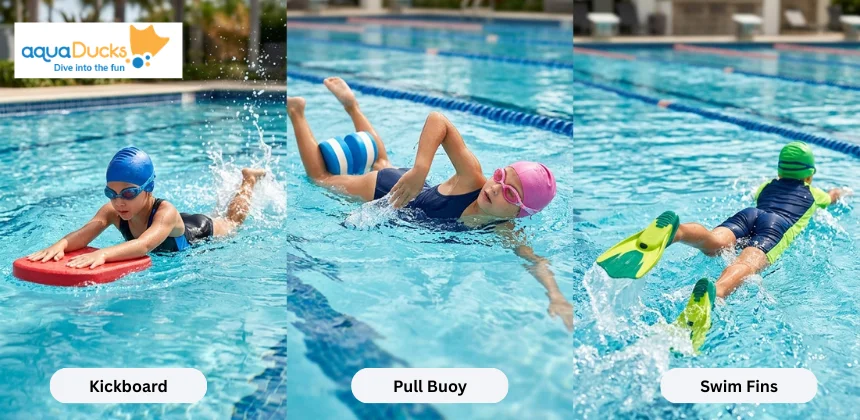
- Kickboard
A flat foam board that your child holds out in front while kicking across the pool. It supports the upper body so your child can put everything into building a strong, steady kick without thinking about anything else.
- Pull Buoy
Shaped like a figure eight and sits between the thighs. It lifts the legs up so your child can work entirely on their arm strokes without kicking at all. Once the kick is solid, the pull buoy comes in to develop the upper body side of things.
- Swim Fins
Short training fins give your child extra push through the water and help them feel what a powerful kick is supposed to feel like. They also build ankle flexibility which takes time to develop on its own. Kids love fins because suddenly they are moving fast and that feeling alone keeps them motivated.
Still figuring out what your child needs at their stage? That is exactly the kind of question we get every day at Aquaducks Swimming School Singapore. If your child is already moving confidently in the water, our Stroke & Development programme might be the natural next step. One quick conversation with our coaches and you will know exactly what to pack.
How to Care for Swim Gear So It Lasts Longer
Good swim gear is not cheap, and replacing everything every few months adds up fast. A few small habits after every lesson make a big difference over time, and none of them takes more than a couple of minutes.
1. Rinse Everything in Cold Water
The moment you get home, rinse every piece of swim gear under cold running water. Goggles, swimsuit, swim cap, rash guard, all of it. Chlorine is harsh, and the longer it sits on fabric and rubber, the faster it breaks things down. Two minutes of rinsing after every session adds months to the life of your child’s gear.
2. Drying Goggles the Right Way
Never wipe the inside of goggle lenses with a cloth or your fingers. The anti-fog coating scratches off easily and once it is gone, it is gone. Just rinse them and leave them to air dry somewhere cool and dry away from direct sunlight.
3. Storing Gear in Singapore’s Humidity
Make sure everything is completely dry before it goes into the swim bag. Damp gear packed into a closed bag grows mildew fast, and that smell does not wash out easily. Keep the bag open or loosely packed between lessons so air can circulate.
4. When to Replace Gear
Swimwear that has gone thin, lost its stretch, or faded heavily is past its best. Goggles that leak no matter how much you adjust them need replacing. A swim cap that tears when putting it on has had its time. It is worth doing a quick check every couple of months so nothing sneaks up on you.
Conclusion
Getting your child into swimming is one of the best decisions you will make as a parent. Not just because it is a life skill, but because of what happens to a child when they realise they can move through water on their own. That confidence does not stay at the pool. It follows them everywhere.
By now, you have everything you need. The right safety gear, swimwear that actually works in hot weather, goggles your child picked themselves, a packed swim bag, and a simple routine that keeps everything in good shape for longer.
The gear sets your child up. The lessons take it from there. If you are looking for a structured programme that grows with your child from their very first session all the way through their SwimSafer stages, check out our kids swimming lessons in Singapore at Aquaducks. We would love to be part of that journey.
FAQs
1. What age should my child start using proper swim gear?
The moment your child starts structured swim lessons, proper gear matters regardless of age. When in doubt, ask your instructor at the first session and they will tell you exactly what your child needs at that stage.
2. How do I know if my child’s goggles fit correctly?
Press the goggles against your child’s face without the strap on. If they create a light suction and hold for a second on their own, the fit is right. Deep marks around the eyes or goggles that slide straight off mean they are the wrong size.
3. What gear does my child need for their SwimSafer test?
SwimSafer assessments require your child to swim in clothing. Stages 1 to 4 Bronze need a t-shirt and shorts. Stage 5 Silver and Stage 6 Gold need a t-shirt and long pants. Pack these in the swim bag on assessment day alongside the usual gear.
4. How do I get my child to wear their goggles without a fuss?
Let them pick the pair themselves. Children are far more willing to wear something they chose. Let them try the goggles on at home first so by the time they get to the pool the feeling is already familiar.
5. Is sunscreen enough for outdoor swim lessons or does my child need UV swimwear too?
Sunscreen alone is not enough. It washes off within the first twenty minutes in the pool, even the water-resistant kind. Apply sunscreen on exposed areas like the face and neck, and let UV swimwear or a rash guard handle everything else.