

Picture this: your little one is standing at the edge of the pool, cap half-on, hair sticking out everywhere, and the instructor is waiting to start. It happens to almost every parent at least once.
Learning how to wear a swimming cap sounds simple, until you’re fixing it two minutes before class starts. Hair gets stuck, the cap keeps popping off, and a ten-second task turns into a mini battle, especially if your child would rather be jumping straight in. Adults getting back into swimming get caught out by this too.
It’s worth getting right. A properly worn cap keeps hair out of your face, helps your child feel more settled, and cuts down on how much chlorine-treated water reaches their hair. That’s especially useful in Singapore, where many swim schools require caps during lessons.
Once you know the trick, it takes less than a minute. Here’s the easiest way to get it on smoothly, for both kids and adults.
How to Put On a Swim Cap: Step by Step
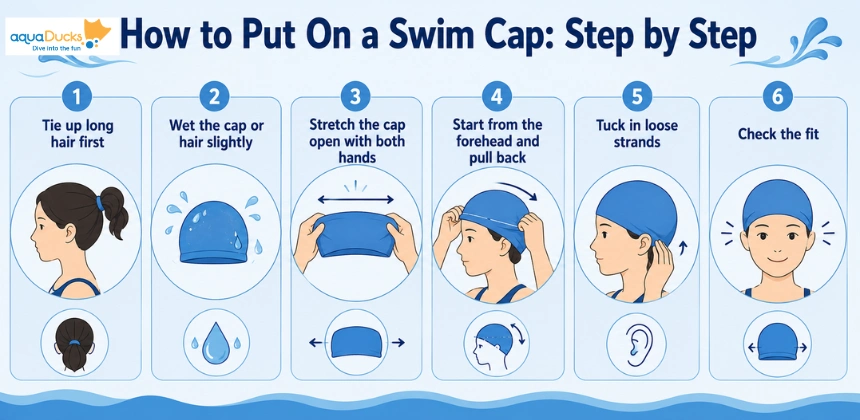
Step 1: Tie up long hair first
If your child has long hair, tie it into a low bun or ponytail before reaching for the cap. This keeps hair from bunching up underneath and makes the rest easier.
Step 2: Wet the cap or hair slightly
A little water helps the cap slide on instead of sticking. This matters most for latex caps; a wet cap stretches more smoothly than a dry one. Most tears actually happen because of fingernails, too much stretching, or an old cap, not because it was dry. But wetting it first still makes it easier to put on.
Step 3: Stretch the cap open with both hands
Use your fingers, not your nails, to widen the opening. Nails are one of the most common reasons caps tear. So keep them away from the material.
Step 4: Start from the forehead and pull back
Place the front edge just above the eyebrows, tilt the head slightly forward, then pull the cap back slowly. Going slow avoids snapping or pinching.
Step 5: Tuck in loose strands
Run a finger around the edges to tuck in any hair peeking out. Ears can go under the cap or stay out, whichever your child likes.
Step 6: Check the fit
It should feel snug, not tight. If it presses hard on the forehead or ears, it’s too small. If it slides around, it’s too loose.
Taking Off a Swimming Cap Without Pulling Hair
Don’t yank it off. Instead, gently roll the back edge forward and lift it slowly over the head. This saves a lot of “ouch” moments, especially with long or curly hair.
Mistakes to Avoid When Wearing a Swimming Cap
A cap that isn’t going on right usually comes down to one of these. Getting these small details right also supports the pool hygiene standards that keep shared pools clean for everyone.
- Wet hands. Dry hands grip the cap better. Wet hands make it slide around, so dry your hands first, even though the cap or hair itself can still be a little wet.
- The wrong size or type. A cap that’s too tight can give a headache, while one that’s too loose won’t stay on. Latex, silicone, and fabric all feel different, so it’s worth choosing swimming gear for kids that actually suits your child.
- Loose strands. Hair can slip out even after a good tuck, especially once your child starts moving around. Check right before they get in the water so nothing pulls mid-lesson.
- Skipping a practice run. This is the biggest fix of all. Don’t let the first try happen at the pool with the instructor waiting. One practice run at home makes a big difference.
How to Get Kids to Wear a Swimming Cap Without a Fuss
If your child isn’t a fan of the cap yet, that’s completely normal, and there’s a lot you can do about it.
- Turn it into pretend play. Call it their “superhero helmet” or “astronaut suit” before a mission to the pool. A fussy moment becomes a fun one fast.
- Let them choose their own cap. Bright colours, patterns, or a favourite character make a real difference. Once it feels like theirs, they’re usually far more willing to wear it.
- Fold practice into the fun. Not as a separate chore, but as playtime at home in front of a mirror. Keep it silly rather than serious, and it stops feeling like a test.
- Build it into the routine. Cap goes on right after swimwear, every single time. Once it’s just “what happens next,” kids stop questioning it.
- Don’t skip the small praise. A quick “well done” when they get it on themselves goes further than you’d expect.
How to Make Your Swimming Cap Last Longer
A little care after each swim keeps it from wearing out early.
- Rinse it after every swim. Chlorine left on the cap dries it out and weakens it over time. A quick rinse with clean water washes it away.
- Dry it in the shade. Direct sun makes latex especially brittle, so let it air dry somewhere shaded instead.
- Store it loose and flat. Don’t fold it tightly or ball it up in a swim bag.
- Skip the powder if unsure. If a latex cap starts sticking to itself, check the manufacturer’s instructions first. Some brands recommend against using powder at all.
Conclusion
Wearing a swimming cap doesn’t have to be a struggle. A little technique, the right cap, and a bit of patience make all the difference, especially while your child is still getting used to it.
Once they’ve got it down, it’s just another easy part of getting ready for a swim, no fuss, no tears, more time actually enjoying the water. It’s one small part of helping your child learn to swim with confidence. And the same steps work just as well if you’re the one easing back into the pool as an adult.
At AquaDucks, we’ve been building water confidence through kids swimming lessons in Singapore since 1989. Our certified coaches guide every swimmer, from first-time cap wearers to confident lap swimmers, across our indoor heated pools in Queenstown, Hollandse Club, Pasir Panjang, Swiss Club, and Mountbatten. Book a trial lesson today and see the difference for yourself.
FAQs
Does a swimming cap keep hair completely dry?
Not fully. Even a well-fitted cap can let a little water in around the edges, especially once your head goes underwater. What it does well is cut down on how wet your hair gets and how much chlorine-treated water reaches it, which still makes a real difference.
Is a swimming cap compulsory in Singapore swimming pools or lessons?
Most public pools and swim schools require one, mainly to keep the pool clean and hair out of the filters. It’s worth checking with your specific pool or school, since rules can vary.
Do adults need to wear a swimming cap too?
Yes, the same rules usually apply. Beyond meeting pool requirements, it keeps hair out of your face and reduces chlorine exposure over regular sessions, same as it does for kids.
How do I know what size swimming cap fits my child?
Most kids’ caps are stretchy enough to fit a range of head sizes, so exact sizing usually isn’t necessary. Snug without pinching and staying put without sliding means it fits.
Should ears be tucked in or left out under the cap?
Whichever your child prefers. Tucked in tends to feel snugger; left out makes it easier to hear the instructor. Neither is wrong.