
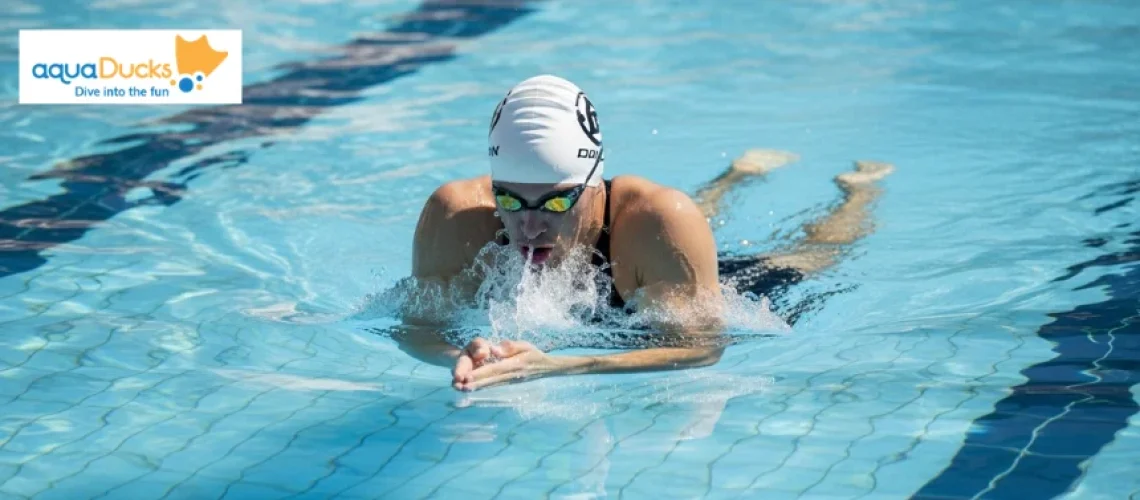
Most people think breaststroke swimming is going to be the easy one. It looks that way, slow, calm, like the swimmers doing it are barely trying.
Then you get in the water, and something just feels off. The kick is weird, the breathing throws you off, and somehow you’re more tired than the person in the next lane who looks half asleep.
It’s not that you’re a bad swimmer. Breaststroke just has a timing to it that no one really explains before you try it.
As a leading swimming school in Singapore, we understand where most swimmers struggle with breaststroke. Here, we break down the technique, common mistakes, and simple drills to help you build the right timing and swim more naturally.
What Is Breaststroke Swimming?
Breaststroke is a swimming style where your arms move in a wide, circular sweep while your legs do a frog-like kick, followed by a short glide through the water. You pull, take a breath, kick, then glide. Then you do the same thing again. When it’s done right, it feels smooth and controlled, not rushed.
What most people don’t realise is that it’s actually one of the most technical strokes in the pool. Small mistakes in timing or movement can make you feel stuck in the water instead of moving forward.
That’s also why people compare breaststroke and freestyle so often. Freestyle is faster and more forgiving, while breaststroke depends heavily on rhythm and timing. When you understand how different swimming strokes work, it becomes easier to see why breaststroke feels more technical, yet more rewarding once you get it right.
The Benefits of Breaststroke Swimming
Breaststroke isn’t just a beginner swimming style. It’s one of the easiest ways to stay active in the water without putting too much strain on your body.
- Low impact on joints: easier on your knees, hips, and shoulders, especially if you swim regularly
- Steady cardio workout: builds endurance without leaving you out of breath
- Better control of breathing: You set your own pace instead of rushing through laps
- Works well in public pools: easy to swim in shared lanes without constantly adjusting your speed
- Head-up option: helpful for casual swims and outdoor pools where you want more visibility
- Surprisingly good calorie burn: the water resistance makes every movement count
- Easy to stay consistent: with a simple rhythm that never feels overwhelming
In Singapore, it fits everyday swimming really well. Whether you’re doing laps for fitness, light training, or just enjoying the water, breaststroke doesn’t demand power or speed to get started.
For children who are just beginning, the Aquaducks offers a Learn to Swim programme which introduces all the major strokes in a structured, friendly environment where kids build confidence at their own pace.
How to Swim Breaststroke: Step-by-Step for Beginners
Breaststroke is all about rhythm. When you rush it, everything feels disconnected. But when you slow it down and let each part flow into the next, it starts to feel smooth and much easier in the water.
1. Body Position
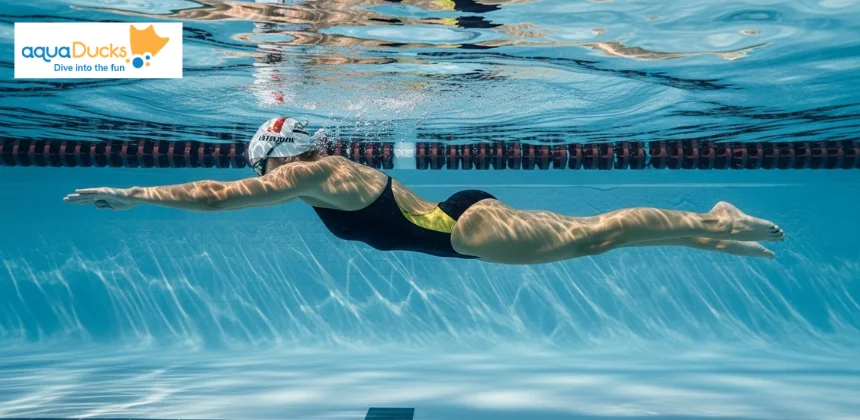
Start by getting your body long and relaxed in the water, almost like you’re stretching forward. Your face stays in the water most of the time, and your hips should stay close to the surface. If your hips drop, the stroke immediately feels heavier and harder to control. Keep your head in a neutral position, looking slightly forward and down instead of lifting up.
2. The Arm Pull
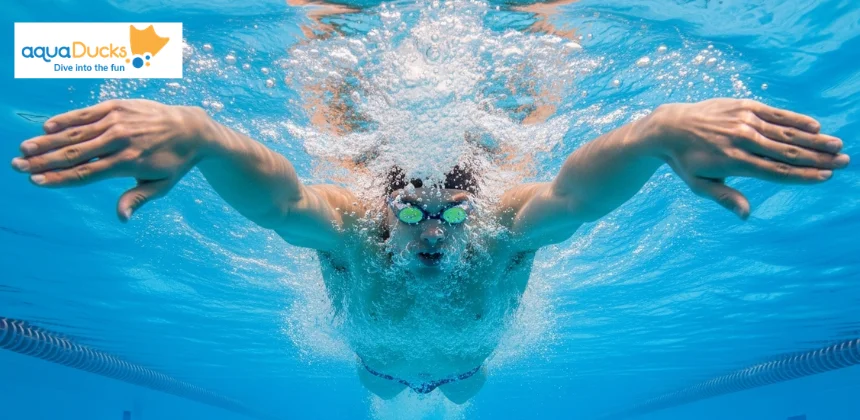
Begin with your arms straight in front. From there, pull them out and around in a smooth, wide circle until they come back together near your chest. It should feel like you’re sweeping through the water, not forcing it. As your arms start to pull and your chest naturally rises, that’s when you take your breath. Keep it quick and controlled, then bring your face back into the water right away.
3. The Frog Kick
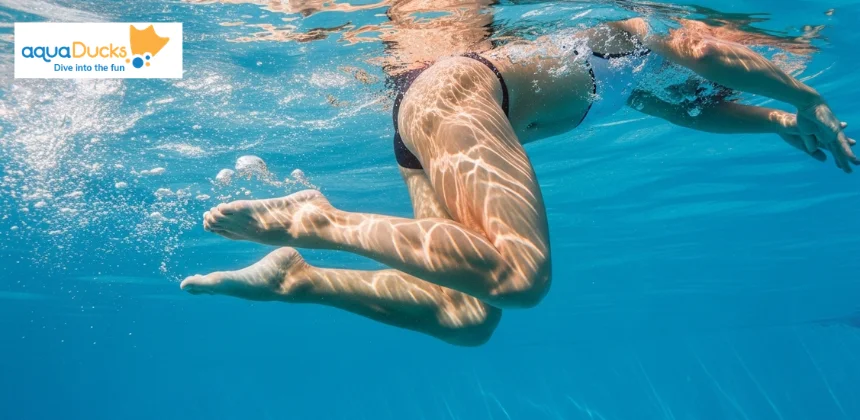
As your upper body settles back down, your legs prepare for the kick. Bring your heels up toward your body, keep your knees relaxed and not too wide, then turn your feet slightly outward before kicking back in a circular motion. Finish by snapping your legs together so you’re pushing water straight behind you. If the kick feels weak or you sink, it usually means the timing or foot position is off.
4. The Glide
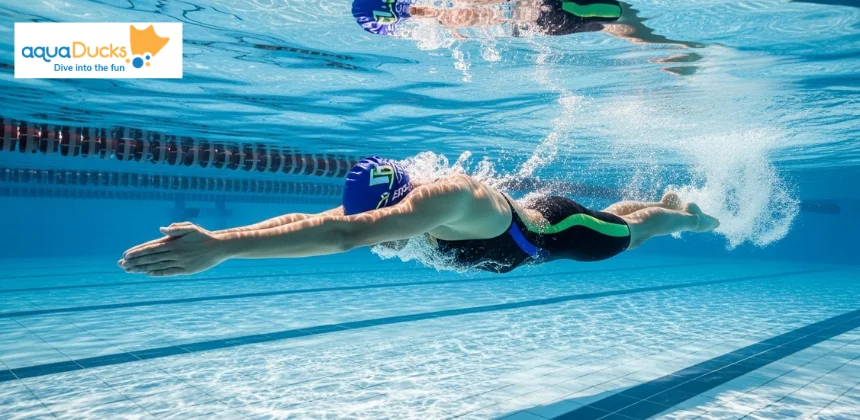
After the kick, stretch your arms forward and let your body slide through the water for a moment. Most beginners skip this part because it feels like wasted time, but it’s actually where you pick up free distance. Even a short glide helps you move further with less effort.
5. Putting It All Together
When you connect everything, it becomes a steady flow: pull, breathe, kick, glide. At first, it might feel slow or slightly awkward, but once the timing starts to click, the stroke becomes more controlled and efficient. Instead of fighting the water, you start moving with it.
Getting that timing right on your own can take a while, especially for younger swimmers who are still building body awareness in the water. If your child is struggling with the timing, Aquaducks offers private swimming lessons where a certified coach works one-on-one with your child to spot exactly where things are breaking down and fix it quickly.
Common Breaststroke Mistakes and the Simple Fixes That Actually Help
Almost everyone makes mistakes when learning breaststroke. It’s normal. The stroke looks simple, but the timing and small details can throw you off quickly. Most problems come from just a few common habits, and they’re easier to fix than you’d think.
- Scissor Kick Instead of Frog Kick: This is one of the most common issues. Instead of kicking symmetrically, one leg ends up doing more work than the other, and you start drifting to one side. It usually happens when the knees open too much or the feet don’t turn outward properly. The fix is to slow the kick down and focus on keeping both legs moving together, finishing with a clean snap at the same time.
- Pulling Too Wide with the Arms: Many beginners try to make big arm movements, thinking it will push them forward faster. Instead, it creates resistance and slows you down. Your arms don’t need to go far out to the sides. A controlled, rounded sweep in front of your body is more efficient and keeps you moving forward smoothly.
- Lifting the Head Too High: It’s natural to want to breathe by lifting your head, but lifting too much throws your body off balance. Your hips drop, and suddenly the stroke feels heavy. The fix is simple: just lift enough to take a quick breath while your arms pull, then bring your face back into the water right away.
- Skipping the Glide: A lot of swimmers rush straight from the kick into the next pull. It might feel faster, but it actually works against you. The glide is where your kick pays off, so even a short pause makes a real difference.
- Sinking Hips: If your hips keep dropping, everything feels harder. This usually comes from poor timing or rushing the kick. The key is to finish your kick fully and let your body stretch forward during the glide so your position resets before the next stroke.
Most of these mistakes come down to timing, not strength. Once the rhythm starts to feel right, breaststroke becomes a lot smoother than it did at the start.
Drills That Build Speed: Practice Smarter at Any Singapore Pool
If breaststroke is about timing, drills are where it actually starts to click. The fastest way to improve your breaststroke technique is to slow things down and fix one part at a time. Do that consistently and the whole stroke starts to feel different.
- Wall Kick Drill: Hold onto the pool wall and practice your frog kick in place. This helps you feel the correct movement without worrying about balance or timing. Focus on keeping both legs moving together and finishing with a clean snap.
- Pull Buoy Drill: Place a pull buoy between your legs so they stay still, then work only on your arm pull. This removes the kick from the equation and helps you notice if your arms are pulling too wide or too deep.
- Count Your Strokes Drill: Swim a short distance and count how many strokes it takes to reach the other end. The goal isn’t speed, it’s efficiency. A high number usually means the timing is off somewhere in the stroke.
- One Arm Breaststroke: Swim using one arm at a time while the other stays forward. This slows everything down and makes it easier to feel the timing between pull, breath, kick, and glide without losing track of any part.
- Glide Focus Drill: After each kick, pause slightly longer than usual and notice how far you travel without moving. Most swimmers are surprised by how much distance a good glide gives them.
- Hip Flexibility Work: Breaststroke depends a lot on your kick, and tight hips can make it harder. Simple stretches like hip openers or frog stretches on land can make a noticeable difference, especially if you sit a lot during the day.
- Streamline Push Off: Every time you push off the wall, hold a tight streamline position for a few seconds before starting your stroke. This carries the speed from the wall instead of losing it right away.
These drills work well for swimmers of any level, but once a child has the basics down and wants to go further, the next step is structured coaching. The Stroke and Development programme at Aquaducks is designed for children aged nine and above who are ready to refine their technique properly. It covers breaststroke alongside other strokes, competition drills, and water safety skills across three progressive levels, so there is always a clear next step to work toward.
Gear Guide: What You Actually Need for Breaststroke in Singapore
You do not need a lot of gear to swim breaststroke. But the few things you do use can make a bigger difference than you’d expect, especially when you’re still working on your technique.
- Goggles
- Swim cap
- Kickboard
- Pull buoy
Swimwear matters more than most people realise. Board shorts and loose fitting swimwear restrict your leg movement and create drag. Since breaststroke depends heavily on a full clean frog kick, a well fitted brief or jammer gives your legs room to move properly and makes a noticeable difference in how the stroke feels.
Conclusion
Breaststroke is one of those strokes that rewards patience. It looks simple from the outside, but it has enough detail underneath to keep you improving for a long time.
The best thing you can do now is get in the water. Pick one drill, slow it down, and focus on just that one thing. You do not need to fix everything in one session. Small improvements add up faster than most people expect.
When your child is ready to take it further, joining a structured swimming programme can help them improve faster with proper guidance, safe training environments, and a clear path to build their skills over time.
FAQs
1. Is breaststroke good for weight loss?
Yes. A 30-minute session can burn between 200 and 400 calories, depending on your weight and pace. The bigger advantage is that it is easy enough to do consistently, and consistency is what actually drives weight loss over time.
2. Why does my neck hurt after breaststroke?
Almost always comes down to lifting your head too high when you breathe. Breaststroke only needs a small lift to clear the water. Fix the head position, and the neck pain usually goes with it.
3. How long does it take to learn breaststroke?
Most people get the basic movement within a few sessions. Getting it to feel smooth takes longer, usually a few weeks of regular practice. The timing between pull, breath, kick, and glide is what takes the most time to click.
4. Is breaststroke faster than freestyle?
No. Freestyle is faster. Breaststroke is the slowest of the four competitive strokes. But speed is not the point. It is more about endurance, control, and being able to swim longer without tiring out.
5. Can I swim breaststroke every day?
Yes, as long as your body is recovering well. It is gentle on the joints, but knee strain can build up over time if you force the frog kick without enough hip flexibility. If you feel soreness, take a rest day.
6. Can I pair breaststroke with other strokes in one session?
Yes. Freestyle adds speed and cardio, and backstroke gives your body a chance to recover while still moving. Mixing strokes works different muscle groups and keeps the session from feeling repetitive.