
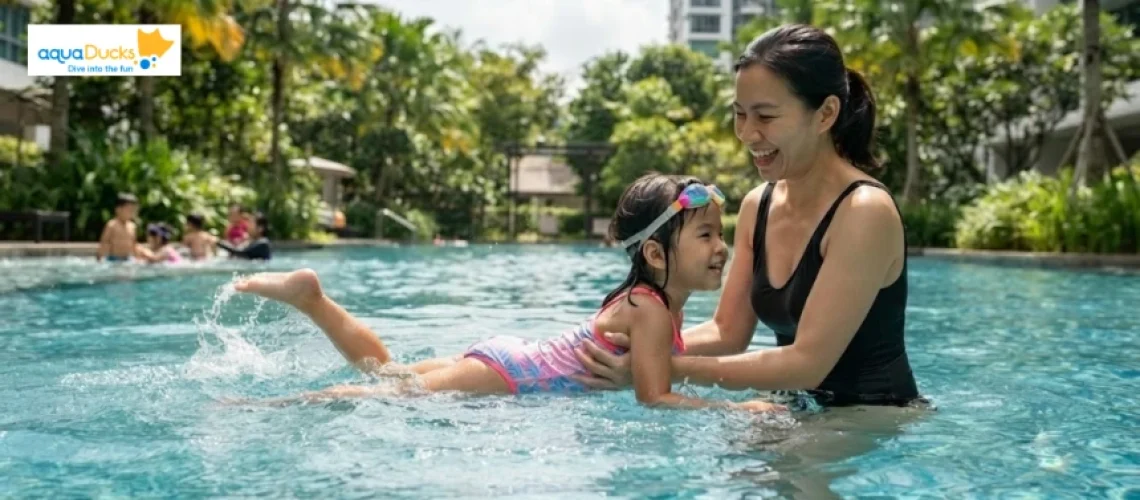
Every Singapore parent knows that moment. Your child is standing at the pool edge, toes curled over the side, excited and terrified at the same time. You want to jump in and help, but you also want them to feel that rush of doing it themselves.
Swimming is a skill that stays with a child forever. In Singapore, pools are tucked into almost every condo, school camps head to the beach, and the tropical heat pulls you toward the water all of the year. Knowing how to swim is simply a vital part of life here.
Most parents are not sure where to begin though. When is the right age? What if the child is scared and refuses to get in? There is no single right way on how to teach a child to swim but there are steps that make the whole process easier, less stressful, and a lot more enjoyable for both of you.
This guide walks you through all of it. The right age to start, how children learn to swim step by step, what to do when things get hard, and how to make the whole experience something your child genuinely loves.
What Is The Right Age To Start Swimming Lessons In Singapore?
Age matters less than most parents think. Readiness is about temperament as much as it is about birthdays. A child who is curious and willing at seven will move faster than one being brought along reluctantly at three.
- Babies (from around six months): Babies learning to swim start with parent-accompanied water classes focused purely on familiarity. Getting into the water early means the pool already feels like a known place by the time formal lessons begin.
- Pre-schoolers (ages 3 to 4): A natural sweet spot. Lessons feel more like play than work at this age and progress tends to come without much resistance.
- Primary school children: Focus and coordination come together at this stage and most children move through the early skills quickly with consistent lessons.
- Starting at 10 or 12?: Still absolutely worth it. Older children often have a clearer sense of why they want to learn and that motivation carries them further than most people expect.
Every age group has a starting point that works for them. Take a look at our swimming programmes for all ages and see exactly where your child fits.
How To Teach Your Child To Swim: Step By Step
Whether you are looking for ways to improve your child’s swimming or starting completely from scratch, you do not need to be a swimming coach to make real progress. What you need is patience, the right approach, and knowing what to focus on at each stage.
Step 1: Help Them Feel Safe In The Water First
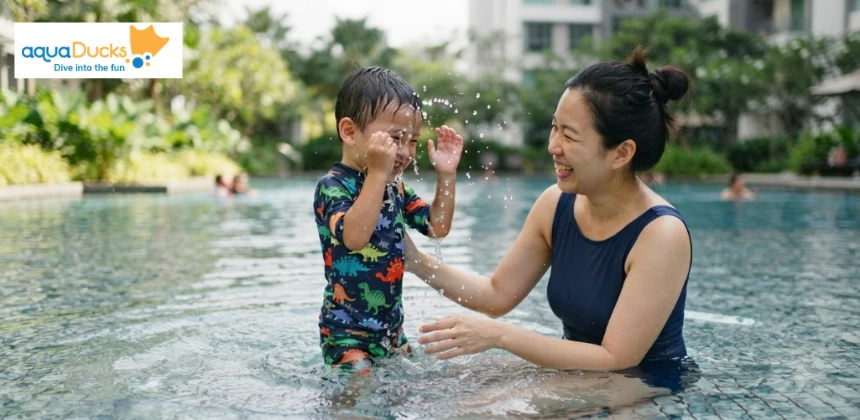
Do not rush into strokes and kicks straight away. Start by just being in the water together and let the environment do the work.
- Let your child splash freely and pour water over their own face
- Stay in the shallow end if they seem nervous and keep the mood playful
- Do not move to the next step until being in the water feels easy and normal for them
Step 2: Teach Them To Float
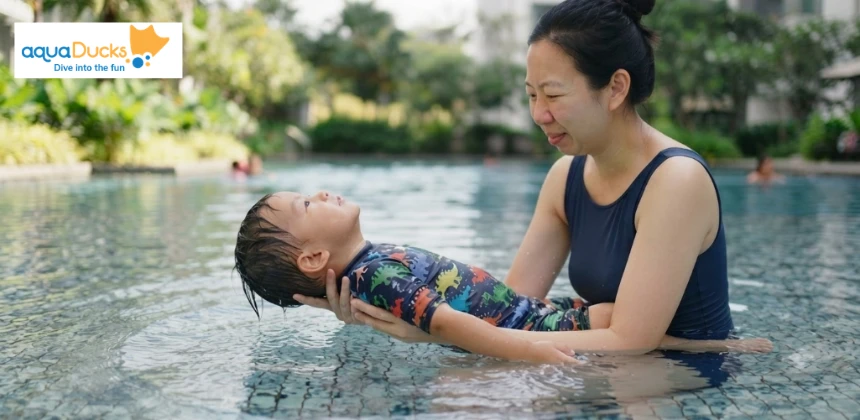
Most children tense up the moment their feet leave the ground and that tension is exactly what makes floating hard. The goal here is stillness not technique.
- Hold your child under their back and ask them to look up at the ceiling or sky
- Tell them to take a slow breath in and let their belly rise
- Start with both hands supporting them, move to one finger, then nothing at all
- Do this gradually without announcing it so they do not tense up again
Step 3: Introduce Kicking
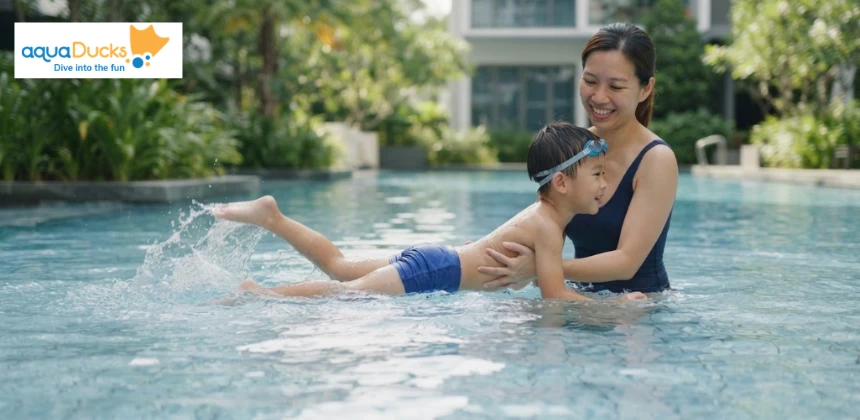
Kicking is where most children start to feel like they are actually swimming for the first time.
- Hold your child at arm’s length or let them hold the pool wall and ask them to kick behind them
- Loose floppy legs work far better than stiff straight ones
- If their kicks are too big and splashy, get beside them and demonstrate a smaller faster kick from the hip not the knee
- Keep sessions short and focused, a few minutes of good kicking beats fifteen minutes of sloppy practice
Step 4: Get Them Moving Forward
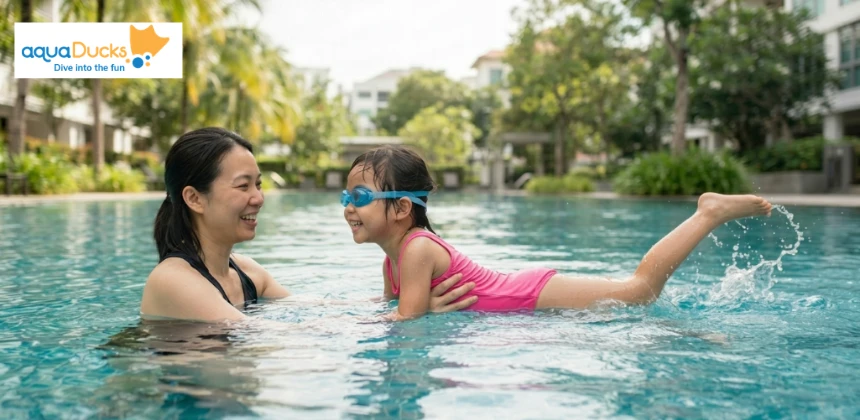
Now it is time to combine the float and the kick and get your child actually moving through the water.
- Support your child under their stomach and move slowly backwards as they kick toward you
- As their kicking gets stronger try taking your hands away for a second or two
- If they sink bring your hands back calmly without any reaction and try again
- If they stay up even briefly that is the moment to make a big deal of
Step 5: Introduce Arm Movement
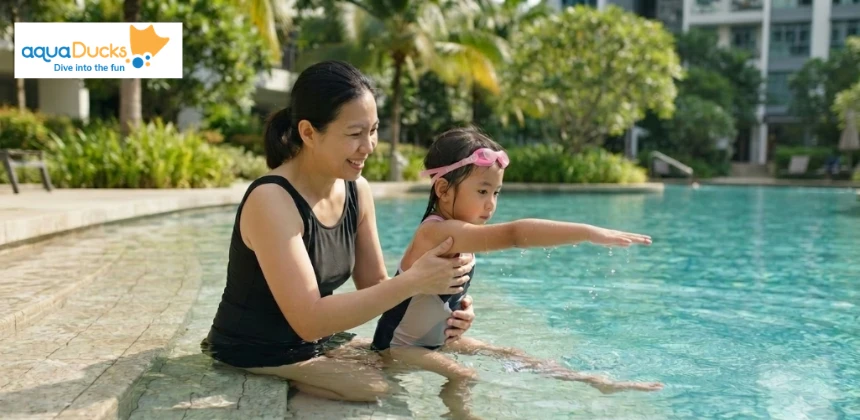
Arms and legs working together is the first real coordination challenge and it helps to build the motion on dry land before taking it into the water.
- Start on the pool steps, one arm reaches forward and pulls back through the air then the other follows
- Once that feels natural take it into the water while they are still kicking
- Focus on one arm at a time if needed rather than rushing both together
- Cheer the effort not the execution, it will look messy before it looks smooth and that is completely fine
Step 6: Teach Them To Breathe While Moving
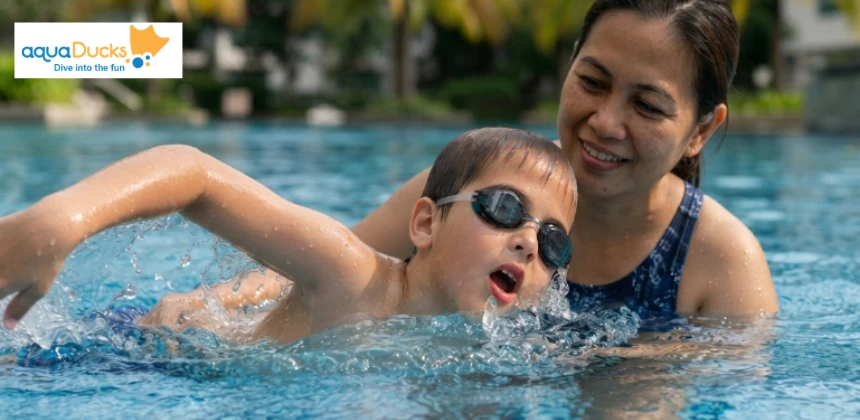
Breathing is the hardest part of the entire process and the one that needs the most patience from you.
- Teach your child to turn their head to the side when one arm pulls back, take a quick breath, then face back down
- Practice the head turn on the pool steps first before adding it into actual swimming
- If your child keeps lifting their whole head instead of turning it, stop and go back to the steps
- Lifting the head drops the hips and makes everything harder, a turned head is the only thing that works
Step 7: Put It All Together
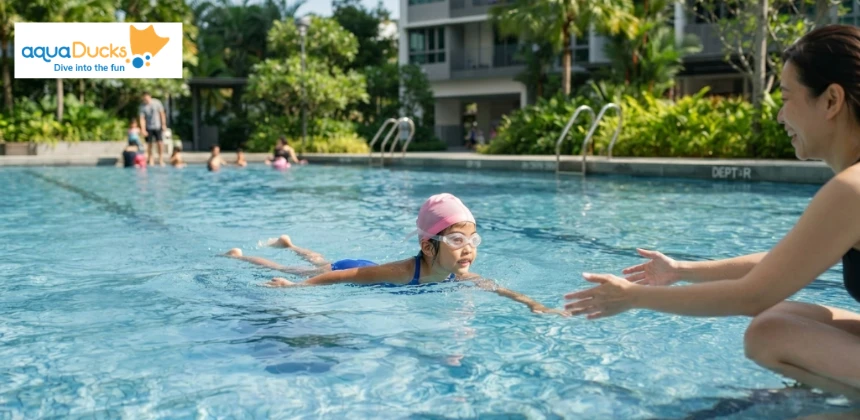
Once your child can float, kick, pull with their arms, and breathe, it is time to let them try it all at once.
- Stand at the other end of the pool and call them toward you
- Pick a distance you know they can make, not one that stretches them too far too soon
- If they stop halfway give them a moment to catch their breath before encouraging them to continue
- The goal is not a perfect length, it is the experience of putting everything together and finishing
Want your child to get there faster? Our Children’s Swimming Lessons follow exactly this progression with certified coaches who know how to make each step stick.
Why Water Safety Matters For Kids In Singapore
Most parents think about water safety at the beach or on holiday. The truth is the risk is much closer to home. The condo pool your child swims in every weekend, the water park visit on a public holiday, the school camp by the sea, these are the everyday situations where knowing what to do in the water actually counts.
A child who can swim is not just safer. They do not freeze up when a wave catches them off guard. They do not hang back at the edge while everyone else jumps in. They say yes when other kids say no.
Alongside swimming lessons, make sure your child knows these five rules early:
- Never swim without a trusted adult nearby until you are fully confident
- Always enter the pool feet first when you are unsure of the depth
- Never push or pull anyone near the water’s edge
- If you feel tired or unsafe, get out straight away
- If someone is in trouble, shout for help immediately and never jump in after them unless you are a trained swimmer
Bring these up before every trip near water, not just once and never again.
Common Swimming Challenges Kids Face And How To Handle Them
Most children hit a tough patch during swimming lessons at some point, often running into the same common mistakes kids make while they are still learning. It rarely means something is wrong. It usually just means they need a slightly different approach from you.
- Your Child Is Afraid Of The Water: Start well before any lesson happens. In the weeks leading up, let your child watch swimming videos, visit the pool just to sit and observe, and get used to the idea slowly. Children who arrive at their first lesson already curious rather than anxious tend to settle in much faster.
At Aquaducks, our Baby and Toddler Swimming Lessons are specifically designed for little ones who are just getting used to the water, at a pace that never feels rushed.
- Your Child Cannot Float: Every instinct a child has tells them to tense up in the water and that tension is exactly what stops them from floating. Try this in the shallow end: ask your child to take a slow breath in, hold it, and let their whole body go loose. No technique, just stillness. You will be surprised how quickly they find their float when the panic leaves.
- Your Child Will Not Let Go Of The Wall: The wall feels safe and open water does not, so work with that instead of against it. Have your child push off the wall toward you, just one arm’s reach to start. Then a little further each time. Make a big deal of every single time they reach you. The wall becomes less important the more times they successfully leave it.
- Your Child Cries Or Refuses To Get In: Do not turn it into a standoff. Sitting out one session and coming back the following week is a much better call than forcing it and making the pool feel like a place they dread. Sit with them after and ask what felt scary. Not to fix it on the spot, just so they feel like you get it. That conversation alone often makes the next session easier.
Should You Teach Your Child To Swim Yourself Or Sign Them Up For Lessons?
Both have a real role to play. The key is knowing what each one is actually good for.
What You Can Do At Home
Regular pool time between lessons makes a bigger difference than most parents give it credit for. Let your child practice what they learned in class. Kick along the wall, float on their back, blow bubbles. Keep it casual. Your job at home is not to teach, it is to make being in the water feel like second nature.
Your attitude at the pool matters too. A parent who stays composed and does not panic when things go wrong gives their child a kind of steadiness that no lesson can fully replace.
Why A Trained Coach Makes A Real Difference
A good swim coach watches how your child moves through the water and catches the small habits that could hold them back later. They read when a child is ready to be stretched and when they need more time at the same level. That kind of judgment only comes with experience and it makes a visible difference in how quickly children progress.
In Singapore, look for coaches who are certified, have experience working with young children specifically, and follow a clear learning path with measurable milestones. That kind of programme shows up quickly in your child’s results.
If your child needs more focused attention, Private Swimming Lessons Singapore can offer that one-on-one guidance that group settings sometimes cannot.
5 Questions To Ask Before Choosing A Swim School
- Are the coaches certified and experienced with children?
- What is the coach-to-child ratio in each class?
- How does the programme track each child’s progress?
- What happens if my child is struggling or needs more time?
- Can we move between group and private lessons if needed?
Still weighing up which format works best for your child? Read our full guide on Group vs Private Swimming Lessons for Kids to help you make the right call.
Conclusion
Every child starts in the same place. Standing at the edge, not quite sure, looking at the water and wondering if they can do it. That first step into the pool is always the biggest one. Everything after that gets easier.
Swimming gives your child something that goes far beyond the water. It is a skill, a safety net, and a source of real enjoyment that stays with them through every stage of life.
If you want your child to learn with coaches who know how to make every stage feel achievable, Aquaducks offers kids swimming lessons in Singapore built around giving every child the right start in the water. Get in touch today to find out which programme suits your child best.
FAQs
1. Is It Safe For My Child To Swim With Goggles Or Should They Learn Without?
Goggles are fine and most coaches in Singapore encourage them. They make it easier for children to open their eyes underwater which builds progress faster. The one thing to watch is that your child does not become so dependent on goggles that they panic without them. Occasionally practice without them so your child knows they can manage either way.
2. What Should My Child Eat Before A Swimming Lesson?
A light snack about an hour before is ideal. Something small like a banana or a handful of crackers gives enough energy without causing discomfort in the water. A full meal right before a lesson is not a good idea. Swimming on a heavy stomach is uncomfortable and can make children feel unwell mid-session.
3. Can My Child Swim If They Have Ear Infections Or Skin Conditions?
Check with your doctor before making any call on this. Mild skin conditions are usually manageable with the right precautions like rinsing off immediately after. Ear infections are trickier because pool water in the ear canal can make things worse. If there is any doubt, sit that session out and return once your child has been given the all clear.
4. My Child Wears Spectacles. Will That Be A Problem In The Pool?
Spectacles come off before getting in the water so vision is the main concern for some children. Prescription goggles are widely available in Singapore and work extremely well. If your child relies heavily on their vision, getting prescription goggles early means it never becomes a barrier.
5. Does Swimming Help With My Child’s Focus And Behaviour At School?
Quite a few Singapore parents notice that children who swim regularly are more settled at school and sleep better on lesson nights. Swimming is a full body activity and the physical effort combined with the rhythm of moving through water tends to have a genuinely calming effect on children. It is one of those benefits that quietly shows up in other areas of life without anyone expecting it.