
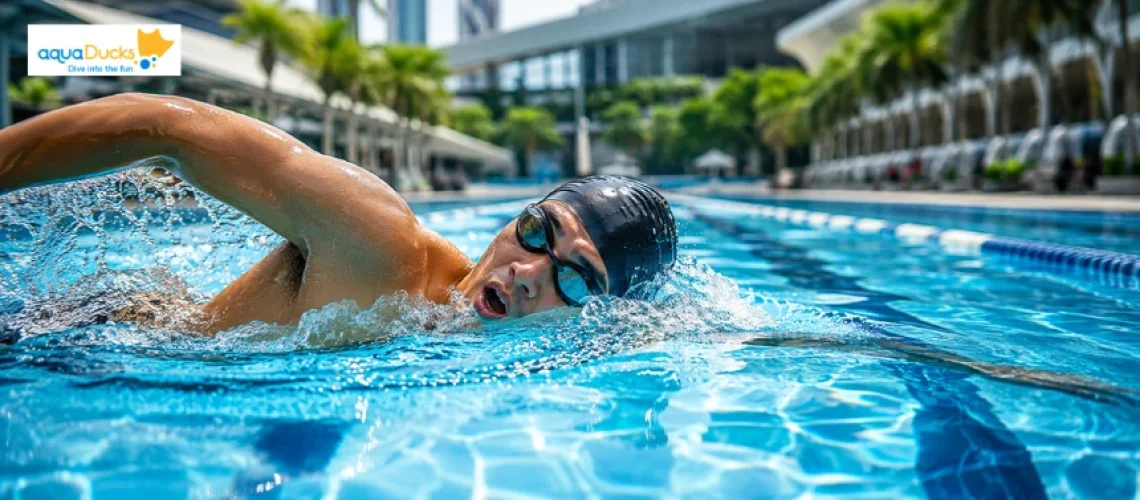
Picture this. You push off the wall, ready to swim fast. Three strokes in, your chest feels tight. Your arms start slapping the water. You lift your head too high, gulp for air, and now you’re not swimming anymore. You’re just trying to survive the next few seconds.
Sound familiar? You’re not alone. Almost every swimmer in Singapore has felt this, gasping for air, wondering why something so simple feels so hard.
Here’s the truth: it’s not about strength. It’s almost always about breathing. Coaches start with breath, not speed, because efficient breathing improves your body position first, and once that happens, smoother strokes and better endurance follow on their own. Once you learn the right swimming breathing technique, that panic turns into something easy.
In this guide, we’ll break it down step by step, the simple way, so you can swim with calm and confidence.
How to Breathe While Swimming: The Complete Technique
Good breathing in the water isn’t one trick, it’s a handful of small habits working together. Here’s each one, broken down properly.
1. Breathe out underwater, not at the surface
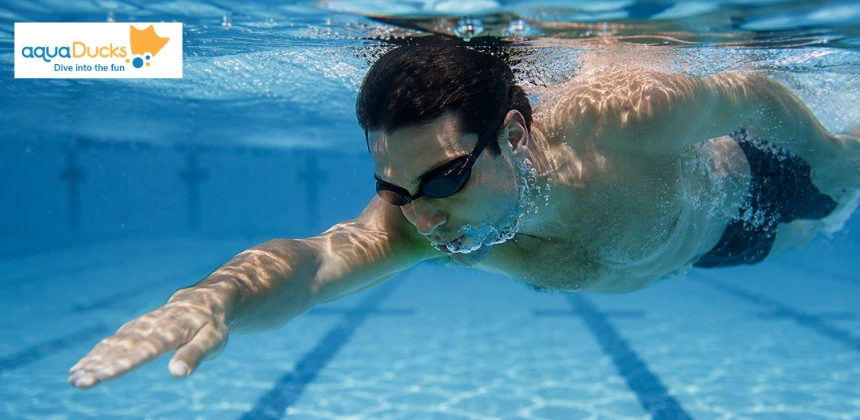
Most beginners hold their breath underwater and try to both exhale and inhale in the second or two their face is above water, which is why they end up gasping.
- Let air out slowly and steadily through your nose or mouth the entire time your face is submerged.
- By the time you turn to breathe, your lungs are already empty, all you need to do at the surface is breathe in.
This single change fixes most of the “panicked gasp” feeling on its own.
2. Keep your breath short and quick
Taking a big, deep breath actually slows you down and throws off your rhythm.
- You don’t need a deep, dramatic breath, just enough air to fuel the next few strokes.
- A quick, efficient inhale keeps your head movement small and your body flatter in the water.
Smaller, more frequent breaths are what keep your stroke efficient.
3. Time your breath with your stroke, not against it
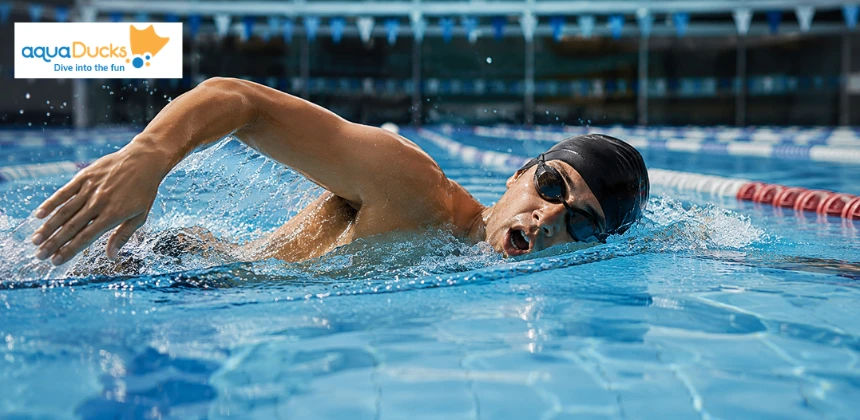
Breathing at the wrong moment is one of the most common reasons swimmers feel like they’re fighting the water.
- Turn your head to breathe right as your arm pulls through the water on the same side.
- This is the point in your stroke cycle where your body naturally rotates enough to make breathing easy without lifting your head high or breaking your rhythm.
This one’s worth slowing down on, even a slightly early or late turn throws off your hips and kick. It’s also the hardest habit to self-correct, since you can’t feel your own timing from inside the stroke.
4. Build a consistent breathing rhythm
Just like a piece of music has a beat, your stroke should have a consistent breathing pattern, rather than grabbing air out of panic whenever you feel short of breath.
- Pick a fixed point in your stroke cycle to breathe every time.
- A common starting pattern is breathing every two strokes.
Practice this in a calm pool at a slow pace first, so your body has time to settle into the pattern before you add speed.
5. Breathe on both sides, not just one
Most swimmers unconsciously favour breathing on one side without realising it.
- Alternate which side you breathe on instead of always favouring the same one, this is called bilateral breathing.
- Try breathing every third stroke, switching sides each time, rather than every second stroke on the same side.
This one’s easy to skip because breathing on one side feels natural, but over time it makes one arm stronger than the other and your stroke crooked. It’ll feel awkward for a few sessions, but most swimmers’ weaker side catches up within a couple of weeks.
Once these five habits become automatic, breathing stops fighting your stroke and starts working with it.
If you’re still building confidence in the water, joining structured Learn to Swim lessons can make mastering these habits much easier, since a coach can spot and correct small timing errors you can’t feel yourself.
Breathing Technique for Freestyle and Other Swimming Strokes
Each stroke needs a different kind of breathing. If you want the full technique breakdown for each one, our guide to different types of swimming strokes covers all four in detail.
- Freestyle: The freestyle swimming breathing technique comes down to turning your whole body, not just your head, to breathe. Keep one eye low in the water so you don’t lose balance. Breathe out fully before you turn to breathe in. For the complete stroke mechanics, see our step-by-step guide to swimming freestyle.
- Backstroke: Your face stays up, so breathing feels easy. The hard part is keeping a steady rhythm.
- Breaststroke: Your head lifts on its own with each stroke. Just don’t lift it too high, or you’ll slow yourself down.
- Butterfly: Breathing happens in short, quick bursts, timed with your body’s wave-like movement.
The goal stays the same for every stroke: stay calm, stay timed, and let your breathing help your stroke instead of fighting it. If you’d like hands-on coaching to fine-tune each of these, our Stroke Development programme works on exactly this.
Common Swimming Breathing Mistakes and How to Fix Them
Even good swimmers slip into small bad habits.
- Tensing your shoulders. Relax them before you turn your head, not after.
- Breathing from your chest, not your belly. Let your stomach expand a little as you breathe in.
- Rushing your exhale. Let air out slowly, not all at once.
- Holding your breath during turns. Keep breathing out gently even during wall push-offs.
- Breathing too fast from nerves. Stick to your normal rhythm, even when you feel nervous.
None of these means you’re doing something wrong on purpose. They’re just habits, and habits can be fixed.
Breathing Exercises for Swimming You Can Practice Outside the Pool
You don’t need water to train your lungs. These simple breathing exercises for swimming work just as well on dry land.
- On your daily walk, breathe in for four steps, then out for four steps.
- Use a straw to practice slow, controlled breathing out.
- Try humming as you breathe out, it forces a steady, even breath.
- Hold, then release. Breathe in, hold a few seconds, then let it out slowly.
Just a few minutes a day, and your body starts treating breath control as normal. Dry-land practice builds confidence, but regular swimming lessons help you apply these breathing skills correctly in the water.
Signs Your Swimming Breathing Technique Is Improving
Progress in your swimming breathing practice is often quiet, and it comes from small daily practice rather than one long session. Track the small wins, fewer gasps, calmer turns, longer laps without panic, and over time, what feels hard starts to feel easy without you even thinking about it. Better breath control is also what allows your swimming endurance to grow, so the effort compounds over time.
Watch for these signs:
- Fewer coughing fits after laps
- Calmer turns instead of rushed gasps
- Longer distances before needing a break
- Less tension in your shoulders and neck
Even one of these means your breathing is improving. Keep in mind, though, that occasional coughing can also simply be a reaction to chlorine in the pool air, not just a technique issue.
Conclusion
Breathing well in the water isn’t about talent. It’s a skill built from a few simple habits: exhaling underwater instead of holding your breath, keeping inhales short, timing your breath with your stroke, building a steady rhythm, and breathing on both sides. Add in the stroke-specific adjustments, a bit of dry-land practice, and patience with the small mistakes along the way, and breathing stops feeling like survival and starts feeling like just another part of your stroke.
Reading about it helps, but real progress comes with guidance. AquaDucks offers professional swimming lessons in Singapore, with a focus on breath control first and speed second, pairing that guidance with someone watching your form and fixing small mistakes early, which makes all the difference.
Ready to put this into practice with expert guidance? Book a trial lesson and start breathing easy in the water.
FAQs
1. Why does water keep going up my nose when I swim?
This usually happens when you breathe in through your nose instead of breathing out through it underwater. Try gently blowing air out through your nose the whole time your face is in the water. This keeps water from sneaking in.
2. Is it normal to swallow water sometimes while learning to breathe?
Yes, it’s very common for beginners. It happens when you breathe in at the wrong moment, usually right as a small wave or splash hits your mouth. It gets much less common as your timing improves.
3. Should kids and adults learn breathing the same way?
The basic idea stays the same, but kids often pick up breathing rhythm faster since they’re less nervous about it. Adults sometimes need a bit more practice to relax and trust the water.
4. Can a swimming cap or nose clip help with breathing?
A swimming cap doesn’t affect breathing much, but a nose clip can help beginners who struggle with water going up their nose. It’s a helpful tool for a short while, though most swimmers stop needing it once their technique improves.
5. How long does it usually take to feel comfortable with breathing while swimming?
It’s different for everyone, but most beginners start feeling noticeably calmer within a few weeks of regular practice. The key isn’t speed, it’s consistency, a little practice often beats one long session.
6. Does Singapore’s climate affect swimming breathing?
Yes. Singapore’s heat and humidity make breathing feel harder even before you get in the pool. Indoor pools can trap heat and chlorine, making breathing feel tighter, while outdoor pools usually feel easier to breathe in. A slower warm-up on hot days gives your lungs time to settle before you push hard.