
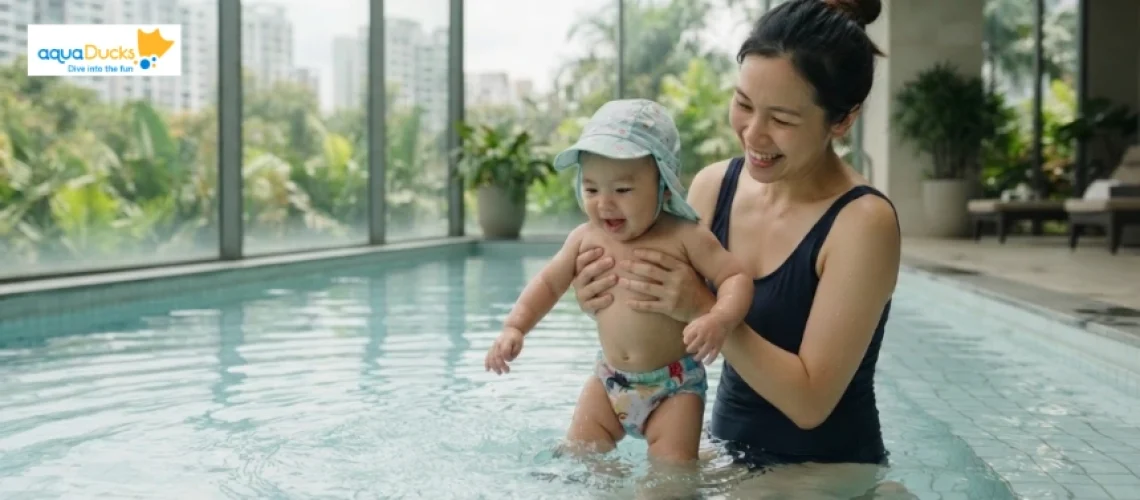
Your baby’s toes touch the water for the first time, and you freeze.
Too soon? Too cold? You’re not even sure what you’re worried about.
If you’re in Singapore, your condo pool is probably one elevator ride away, and your baby’s been staring at it for weeks. But no one hands you a manual for this. Your paediatrician brought it up once, in passing, and now you’re Googling when baby can swim in the pool at midnight while your baby sleeps soundly next door.
Turns out, the answer isn’t as tricky as it feels right now.
There’s a general age doctors point to for baby’s first real swim, but the full picture depends on a few small things most parents only learn the hard way. Your baby’s skin, the water, even Singapore’s own weather all play a part.
By the end of this, you’ll know when your baby’s ready, what to bring, and how to make that first swim a happy one.
Age-by-Age: When Can Baby Swim in the Pool
Newborn to 2 Months: A Little Too Soon
Parents often wonder how early babies can swim. For the very first few months, most doctors suggest waiting a little longer before introducing your baby to a swimming pool, even a shallow, gentle one. Your baby’s skin is still brand new, and their immune system hasn’t caught up either.
What’s okay instead? A sponge bath at home works well. A small basin with clean, body-temperature water lets baby splash safely while they grow a little stronger.
2 to 6 Months: Small Steps in Shallow Water
By this stage, some babies are ready for gentle water play, a baby pool, a paddling pool, or a bathtub with extra room to kick.
Keep sessions short. Ten minutes is plenty. Aim for water around 32 to 34°C, warm enough to feel comfortable, without being too hot.
This is also the age range where structured infant classes start to make sense. AquaDucks, for one, welcomes babies from 4 months old into small, parent-assisted Infant Swimming Lessons in Singapore designed around this exact stage, so your baby gets used to the water with someone experienced guiding every move.
6 Months and Beyond: Ready for the Real Pool
There’s no single official age that applies to every baby, but six months is commonly suggested as a practical starting point. By now, your baby usually has better head control, stronger neck muscles, and more comfort being held in water.
This is often when parents in Singapore start bringing baby to the condo pool or a baby-friendly swim class. Before visiting busier public pools, it’s also worth checking that your baby’s routine health visits and vaccinations are up to date.
Readiness looks different for every baby though, some are eager splashers at six months, others need a little more time.
If you’re looking into swim classes built for this stage, AquaDucks runs a Baby & Toddler Swimming Lessons programme for babies aged 6 to 35 months, focused on breath control, simple swimming movements, and playful water confidence.
A quick note: this guide is about pool water, not sea or beach water, which comes with its own set of considerations.
Why Age Matters: What’s Really Going On
Ever wonder why doctors often suggest waiting a bit before that first swim? It comes down to a few things happening inside your baby’s body, according to general paediatric health guidance.
- Their skin is still learning. A newborn’s skin is thinner and more delicate than an adult’s. Chlorine and prolonged water exposure can dry it out or cause irritation faster than you’d expect.
- Their immune system is still building itself. Babies aren’t born with full protection against germs, which is why paediatric guidance often points to public pools and shared water as carrying small extra risks for very young babies.
- They can’t regulate body heat as well as adults do. This is a commonly cited reason in paediatric advice, babies don’t yet have the same built-in temperature control adults do, so even water that feels fine to you might affect them faster than expected.
- Their muscles are still growing stronger. Balance, coordination, and steady movement all take practice, and a young baby’s body simply hasn’t had enough of it yet.
None of this means swimming is bad for babies. It just means their bodies benefit from a bit more time before the pool becomes the fun, splashy experience you’re picturing.
Safety Checklist & Packing List for Baby’s First Swim
Once you’ve got the green light, a little prep goes a long way. Here’s what to sort out before that first splash.
Safety Must-Haves:
- Swim diapers, not regular ones. Regular diapers soak up water and swell up fast, they’re not made for pools. Swim diapers are designed to hold in mess without turning into a soggy mess themselves.
- Sun protection, even on cloudy days. Singapore’s sun is strong all year round. A baby-safe sunscreen, a wide-brim hat, and UV-protective swimwear help keep tender skin safe, both in and out of the water.
- Check the pool’s cleanliness. Not all pools are created equal. A quick look at water clarity and a sniff for overly strong chemical smells can tell you a lot before baby goes in.
- Never look away. This one’s simple but worth saying clearly, always keep a hand on baby or stay within arm’s reach the entire time they’re in the water.
What to Bring Along
- Swim diaper (pack a spare)
- Hooded towel for quick drying
- Baby-safe sunscreen
- Sun hat
- An approved Buoyancy aid, if your baby’s ready for one, but remember it’s a support, not a substitute for hands-on supervision
- A change of clothes
- A small toy to make the pool feel fun and familiar
Not sure what to pack? Read our guide on what babies wear swimming before your baby’s first swim.
Singapore-Specific Tips Every Parent Should Know
Living here comes with a few perks and a few quirks when it comes to baby’s swim time. Here’s what local parents should keep in mind.
- Chlorine levels in condo pools can run high. Some pools may use chlorine levels that feel stronger to babies with sensitive skin. A quick rinse with plain water right after swimming can help wash off any residue.
- Time it around the weather, not just the clock. Singapore’s midday sun is intense, and haze days can affect air quality too. Early mornings or late afternoons tend to be gentler on baby’s skin and easier on everyone’s patience.
- Public pools need a closer look. Community and hotel pools see a lot of traffic. Check posted water quality reports where available, and avoid peak hours when the pool is most crowded.
- Watch the haze, not just the forecast. On days when the PSI readings climb, it’s worth skipping the pool altogether, indoor water play at home is a safer bet until air quality clears up.
- Cool down indoors when needed. With Singapore’s heat and humidity, babies can overheat faster than expected, even near water. Shaded areas, breaks in the shade, and staying hydrated all help balance things out.
Conclusion
Bringing baby to the pool for the first time is a small milestone that can feel like a big decision. Most babies are ready somewhere around the half-year mark, but the exact timing always comes down to your own little one’s growth, comfort, and health.
A bit of planning makes all the difference. The right gear, a mindful eye on Singapore’s sun and weather, and a calm, patient approach turn that first splash into a happy memory instead of a stressful one.
Every baby moves at their own pace, and both eager splashers and cautious starters are perfectly normal. If you’re looking for a guided start, AquaDucks offers kids swimming lessons in Singapore built around little ones just getting comfortable in the water, with warm pools and patient instructors every step of the way.
Soon enough, pool days will feel like second nature, just another part of your family’s routine.
Ready to give your baby a confident start? Book a trial lesson today.
FAQs
How long can baby stay in the pool?
Short sessions work best. Around 20 to 30 minutes is plenty for most babies, even after 6 months. Watch for cold, tired, or fussy signs, that’s your cue to wrap up.
What if my baby swallows a little pool water?
It happens more often than you’d think. A small sip usually isn’t a big worry, but keep an eye out for tummy upset over the next day or two, and let your paediatrician know if anything seems off.
How do I dry my baby’s ears after swimming?
Gently tilt their head to each side to let water drain out, then pat the outer ear dry with a soft towel. Avoid cotton buds, they can push water deeper instead of out.
Does my baby need sunscreen for the pool?
For babies under 6 months, most experts recommend shade, hats, and protective clothing first. If sun exposure can’t be avoided, it’s worth asking your paediatrician about appropriate protection. Once your baby’s older than 6 months, a mineral-based sunscreen made for babies works well.
What if baby cries or seems scared?
This is more common than you’d think. Never force it. Try again another day with less water, more time to get used to the feel of it, and maybe a favourite toy floating nearby.
Is sea water safe for babies?
Sea water brings its own set of things to think about, tides, temperature, and cleanliness can all vary a lot. It’s best to wait until your baby is older and steadier before heading to the beach for a swim.