
Swimming is one of the most important life skills your child can learn. It keeps them active, builds confidence, improves coordination, and most importantly, helps keep them safe around water.
But learning to swim is not always a smooth ride. Every child makes mistakes in the pool at some point, and that is completely okay. Some are just small habits that take a little time to correct, while others can quietly affect your child’s confidence and make the water feel more overwhelming than it should.
Even strong swimmers started somewhere. They kicked the wrong way, forgot to breathe properly, or felt nervous when putting their face in the water. What matters is having the right guidance, plenty of practice, and a positive environment where your child feels comfortable learning.
In this guide, we will look at the most common swimming mistakes kids make, why they happen, and how you and their swim coach can help them become safer, stronger, and more confident in the water.
Most Common Swimming Mistakes Kids Make While Learning to Swim
Most swimming mistakes happen for the same reason, the water feels unfamiliar, so your child’s body fights it instead of working with it. From breathing challenges to body positioning and water confidence, these common habits can slow their progress if they are not caught early.
1. Being Afraid to Put Their Face in the Water
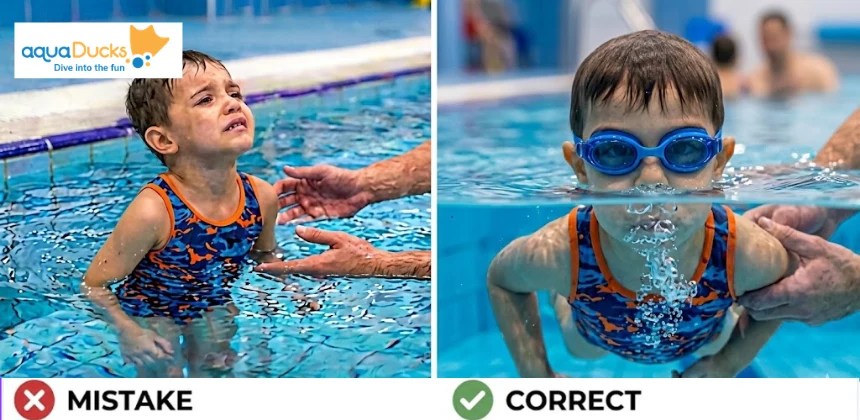
One of the most common swimming mistakes children make is avoiding putting their faces in the water. Many kids feel uncomfortable when water touches their eyes, nose, or mouth, and some may panic or freeze if water suddenly rushes in unexpectedly. This reaction is completely normal, as children naturally protect themselves from unfamiliar sensations. Building water confidence takes time, especially during the early stages of learn-to-swim lessons.
How to Help
Avoid forcing your child to put their face underwater, even with good intentions, pressure tends to backfire. Instead:
- Start with splashing and bubble-blowing before attempting submersion
- Progress slowly, chin dip first, then full face underwater
- Teach nasal exhaling to naturally prevent water from entering
- Use goggles to reduce irritation and build underwater confidence
- Practise a calm “stop, stand, wipe, continue” response for accidental water entry
Small victories build confidence much faster than pressure, helping your child feel safe and comfortable in the water.
2. Holding Their Breath Too Long
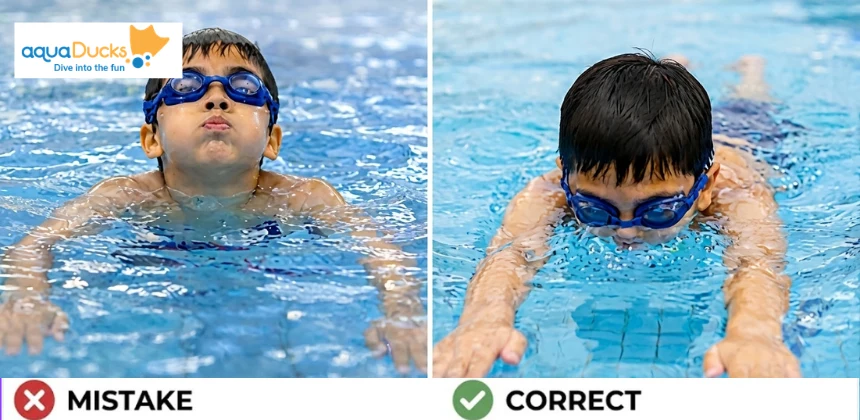
Many beginner swimmers think they should take one big breath and hold it for as long as possible. This often happens because they are worried about getting water in their nose or mouth. Unfortunately, holding their breath makes them tense and causes them to tire more quickly in the water.
How to Help
Teach your child to:
- Breathe out slowly into the water
- Blow bubbles regularly
- Stay relaxed while swimming
Good breathing habits help your child feel more comfortable and swim more efficiently.
3. Kicking From the Knees
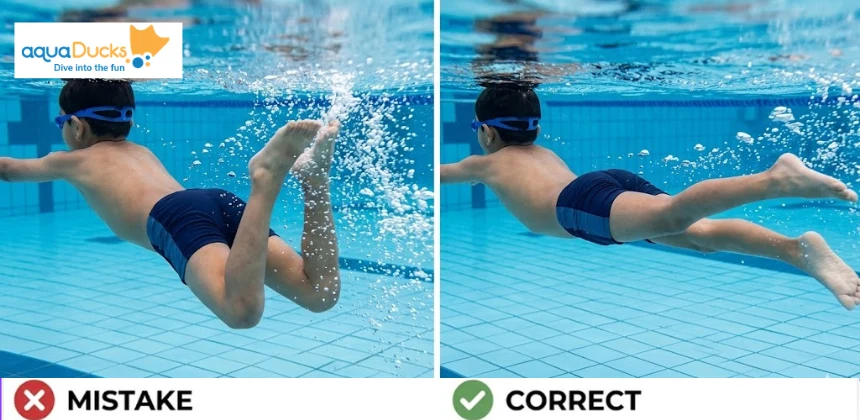
Young swimmers often kick by bending their knees too much because the movement feels similar to riding a bicycle. While it may feel natural, this technique creates unnecessary resistance and makes swimming less efficient.
How to Help
Encourage your child to:
- Keep their legs long
- Kick from the hips
- Make small, quick kicks
With practice, their kicks will become stronger and more effective.
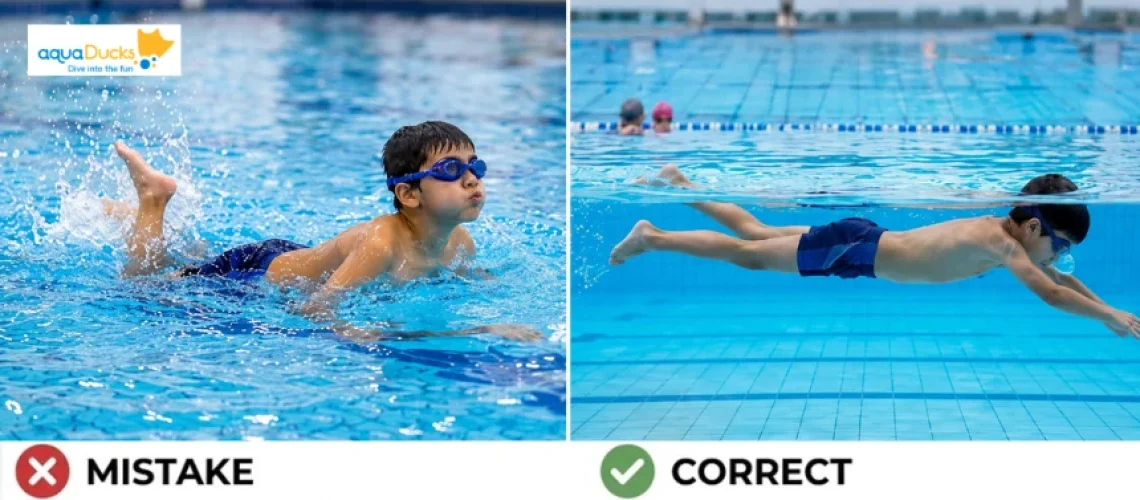
4. Looking Forward Instead of Down
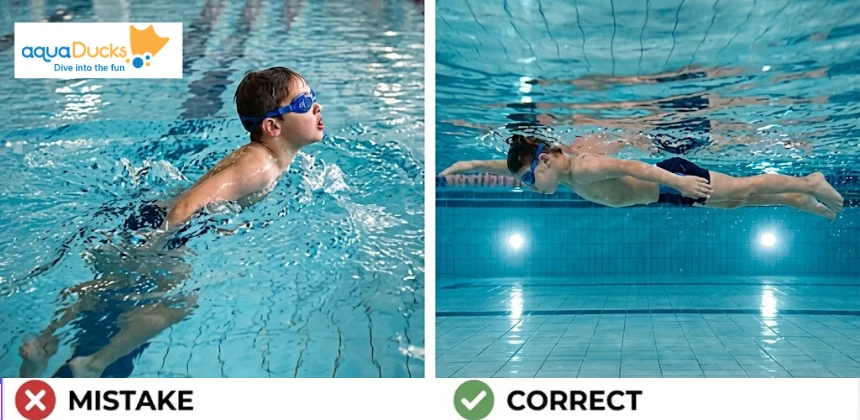
Many children constantly lift their heads because they want to see where they are going and feel more secure in the water. While this may seem harmless, it causes their hips to sink and creates extra resistance. As a result, swimming becomes more tiring and less efficient.
How to Help
Encourage your child to:
- Look at the pool floor
- Keep their neck relaxed
- Trust their body position
Once they become comfortable with this, swimming will feel much easier and more natural.
5. Moving Too Fast Too Soon
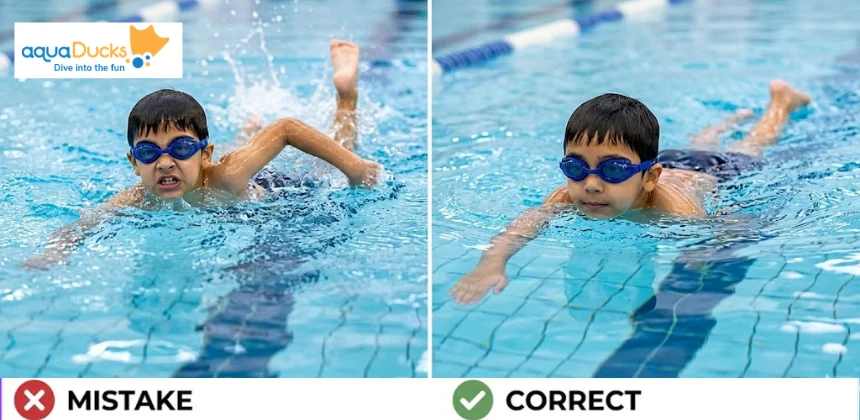
Some children become excited and try to swim as fast as possible before they have mastered the basics. It is natural for kids to want to race and show what they can do, but focusing on speed too early often leads to poor body position, incorrect breathing, and quicker fatigue.
How to Help
Encourage your child to:
- Focus on technique before speed
- Practise movements slowly and correctly
- Build strong fundamentals first
Strong foundations are what will make your child faster and more confident over time.
6. Forgetting to Float
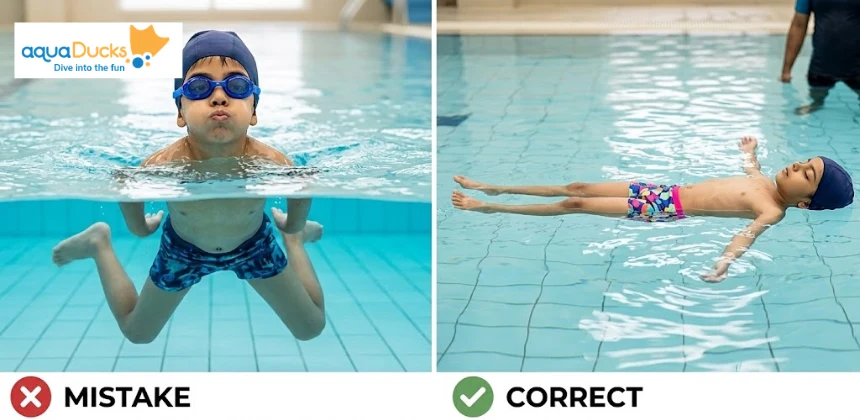
Floating is one of the most important swimming skills, yet many children want to skip it and move straight to swimming strokes. Most preschool swimming classes introduce floating early because it helps children develop balance, relaxation, and essential safety skills in the water. A child who is comfortable floating will almost always find it easier to learn other techniques later on.
How to Help
Encourage your child to:
- Practise floating regularly
- Relax their body in the water
- Take their time building confidence
A strong floating foundation supports everything else that comes after.
7. Using Arms and Legs Without Coordination
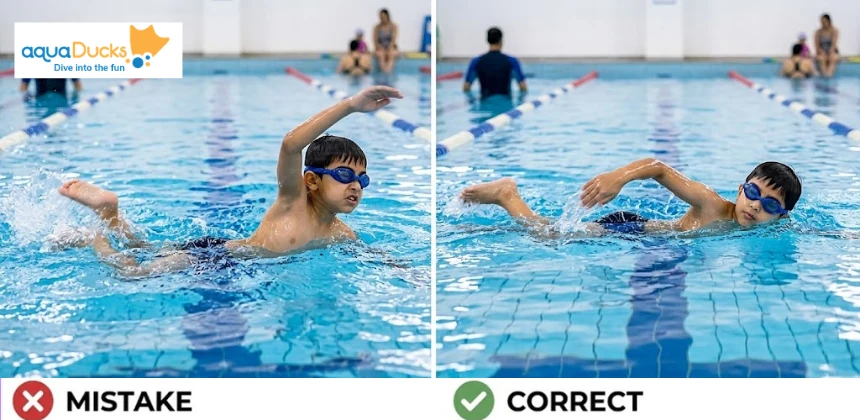
Swimming requires multiple movements to work together smoothly. Since your child is learning several new skills at once, it is common for beginners to move their arms and legs separately rather than as one coordinated action. This slows them down, causes them to tire more quickly, and affects their balance in the water.
How to Help
Encourage your child to:
- Practise one skill at a time
- Focus on rhythm and timing
- Gradually combine movements
Breaking skills into smaller steps helps coordination develop more naturally.
8. Tensing Up in the Water
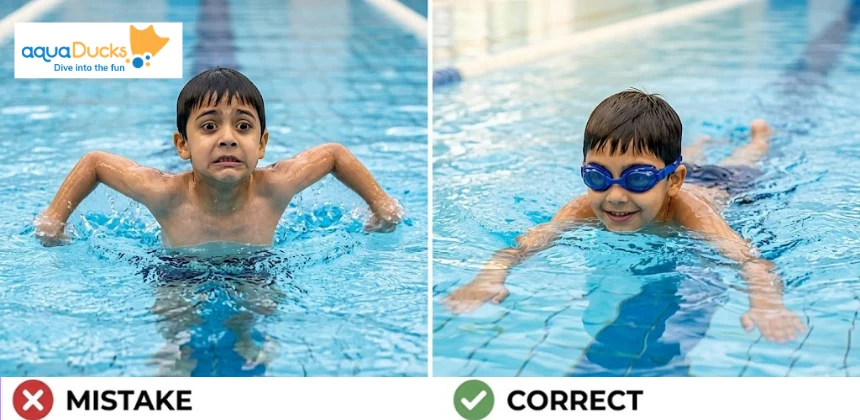
Many children become stiff when they feel nervous or unsure in the water. Fear naturally causes muscles to tighten, which affects breathing, floating, balance, and overall movement. When the body is tense, swimming becomes much harder than it needs to be.
How to Help
Help your child stay relaxed by:
- Keeping practice sessions fun and positive
- Allowing them to progress at their own pace
- Celebrating small achievements
When your child feels safe and comfortable, they are far more likely to relax and move confidently in the water.
9. Ignoring Water Safety Rules
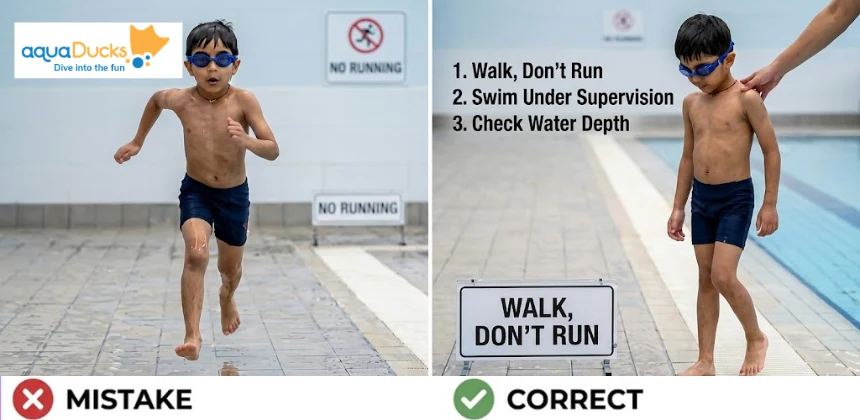
As your child becomes more confident in the pool, they may sometimes forget important safety rules. While technique matters, one of the biggest benefits of swimming lessons is developing safe habits around water. Running near the pool, jumping in without checking the depth, swimming without supervision, or engaging in rough play can all increase the risk of accidents.
How to Help
Teach your child to:
- Walk instead of running near the pool
- Check the water before jumping in
- Follow pool rules at all times
- Swim under adult supervision
Confidence and caution must always go hand in hand.
If you are noticing some of these mistakes in your child, finding the right swimming school in Singapore can make a real difference. AquaDucks offers structured lessons specifically designed to correct these habits early, in a safe and supportive environment built around your child’s pace.
How You Can Support Your Child’s Swimming Progress
You play a huge role in your child’s swimming journey. The support you provide outside of lessons often affects how quickly they improve.
- Stay Positive: Avoid focusing only on mistakes. Recognise effort and improvement instead.
- Be Patient: Every child learns at a different pace. Comparing them to others creates unnecessary pressure.
- Practise Regularly: Consistent exposure helps build confidence and reinforce skills.
- Trust the Process: Swimming develops in stages. Children who build strong fundamentals almost always become stronger swimmers in the long run.
Not sure where to start? Learning how to choose the best swimming school in Singapore can help you find a programme that fits your child’s needs and pace.
Why Professional Swimming Lessons Make a Difference
Many swimming mistakes can turn into long-term habits if they are not corrected early. Enrolling your child in structured kids swimming lessons with experienced instructors helps identify and address these issues before they become harder to fix. A well-designed swimming programme teaches proper technique while helping your child build water confidence, improve stamina, develop essential safety skills, and progress step by step at a comfortable pace. Most importantly, your child learns in a safe, supportive, and enjoyable environment that encourages continuous improvement and a genuine love of swimming.
Conclusion
Every child makes mistakes while learning to swim. That is not a sign of failure — it is simply part of the process. Whether your child struggles with breathing, kicking, floating, or confidence, these challenges can be improved with patience, practice, and the right support.
Swimming is much more than learning strokes. It teaches resilience, confidence, discipline, and water safety skills that stay with your child for life. When they are given the chance to learn in a positive and supportive environment, those early mistakes become part of what makes them a strong, capable, and confident swimmer.
The right support can turn a hesitant swimmer into a confident one. AquaDucks has helped countless children in Singapore build the skills, safety habits, and confidence they need in the water. Contact us today to get your child started.
FAQs
1. At what age should a child start swimming lessons?
Most children can begin water familiarisation classes as early as infancy, while structured swimming lessons are often suitable from around 3 to 4 years old. The right age depends on your child’s comfort level, maturity, and readiness to follow instructions.
2. How often should kids attend swimming lessons?
For steady progress, most swim schools recommend at least one lesson per week. Children who practise more frequently often build confidence and improve their skills faster.
3. Can children learn to swim if they are afraid of water?
Yes. Many children start swimming lessons with a fear of water. With patient instructors, gradual exposure, and positive experiences, most children can overcome their fears and become comfortable in the pool.
4. How do I know if my child is ready to move to the next swimming level?
Signs of readiness include stronger water confidence, better control of breathing, improved stroke technique, and the ability to complete skills independently. A qualified swim instructor can assess your child’s progress and recommend when they are ready to advance.
5. How long does it take for a child to learn to swim?
Most children progress at different rates depending on their age, confidence, and lesson frequency. Some may learn basic water skills within a few months, while others need more time to develop strong swimming techniques and safety skills.