
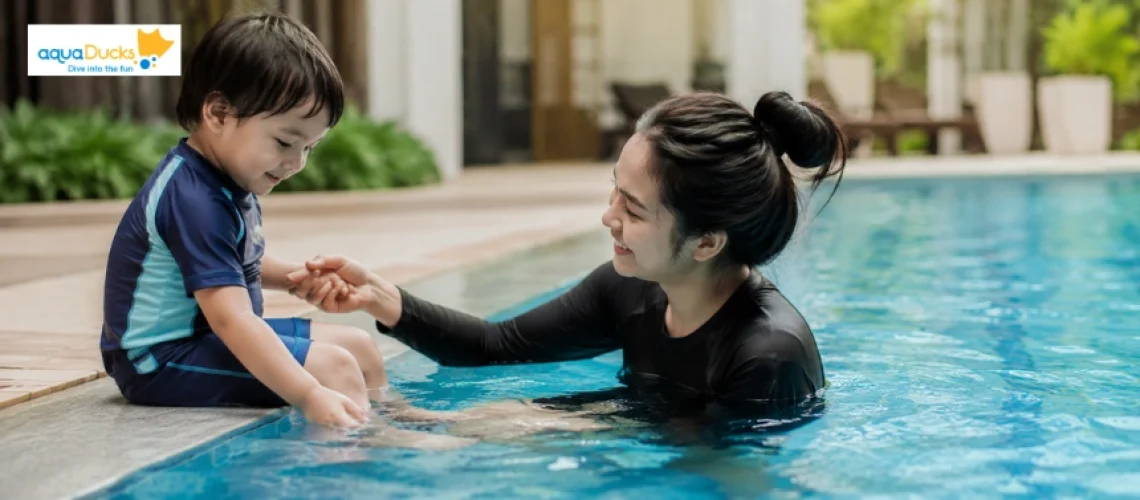
Your little one is standing at the edge of the pool, feet frozen, eyes wide with panic. You reach for their hand, and the tears start. This is what a fear of water often looks like up close, and it shows up just as often at home, where a simple five-minute bath turns into a struggle for everyone.
If this sounds familiar, you’re not doing anything wrong, and your child isn’t being difficult. This is one of the most common worries kids carry, and it has nothing to do with how brave they are. Their mind just needs more proof that water isn’t something to be afraid of.
Maybe you’re worn out from the crying, the clinging, or watching your child tense up the moment water comes up. That’s okay. Most kids work through this when they’re allowed to go at their own pace instead of being pushed.
At Aquaducks, our team of experienced kids swimming coaches sees this fear play out every week, and we know how to work through it gently. This guide draws on that hands-on, practical experience to walk you through simple ways to help your child overcome their fear of water, without pushing or forcing anything. First, it helps to know why this fear shows up in the first place.
Why Kids Get Scared of Water (And What It Looks Like)
Before you can help your child feel better in the water, it helps to know where the fear is coming from. Most of the time, it’s not random. Something usually sparked it, even if your child can’t explain it in words.
Common Causes of Water Fear in Children
Sometimes it starts with one bad moment, like a mouthful of pool water or being dunked without warning. Other times, there’s no clear reason at all. The water moves on its own, it’s loud, and your child can’t see what’s under the surface. That’s a lot for a young mind to handle. Common triggers include:
- A scary or painful experience in water
- Fear of the unknown, like not being able to see or control what happens
- General sensitivity to new sounds, textures, or sudden movement
Signs Your Child Is Struggling With Water Anxiety
You’ve probably already noticed a few signs. These reactions aren’t your child being dramatic; their body is genuinely on alert. Watch for:
- Crying or screaming near water
- Clinging tightly to you during baths or pool time
- Going quiet and stiff instead of crying out
- Faster breathing, shaking, or holding their breath
None of this means your child is stuck this way. With the right approach, most kids come around faster than parents expect, and it starts with these nine simple shifts.
9 Gentle Ways to Help Your Child Feel Safe in Water
Build Trust First
This is where everything else begins. Your child needs to feel safe with you before they’ll feel safe in the water.
1. Start Small With Bath Time or a Splash Pad
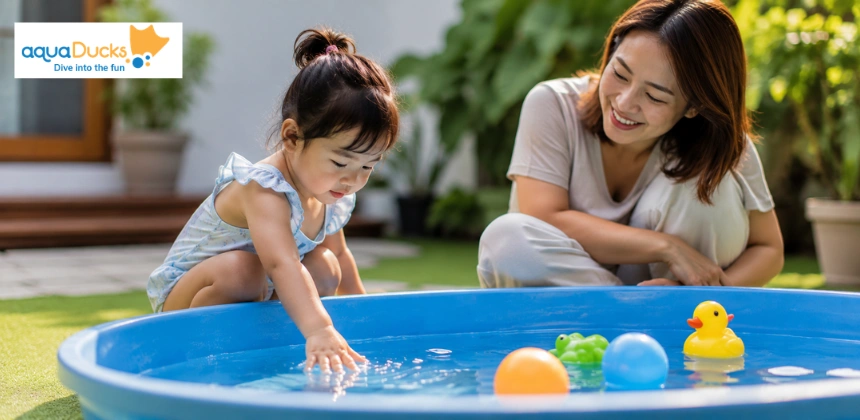
Big pools and loud splash zones can feel like too much, too fast. Begin somewhere smaller and quieter, like a shallow tub, a splash pad, or a kiddie pool in the backyard. Let your child touch the water on their own terms before you ever ask them to get in.
2. Never Force It
Pushing a nervous child into water almost always makes things worse. Instead, let your child set the pace, even if that means just sitting near the pool for a few days before dipping in a toe.
3. Get in the Water With Them
When your child sees you relaxed in the water, it helps their body relax too. Hold them close at first, and slowly give them a little more space as they warm up.
Make It Feel Like Play, Not a Lesson
Fun works faster than pressure ever will. Here’s how to shift the mood.
4. Turn Practice Into Play
Fear loosens its grip when fun takes over. Try blowing bubbles, singing songs, or playing simple games like “pour the cup” instead of treating water time like a lesson. The goal is for your child to forget they’re even practising.
5. Bring In Toys They Already Love
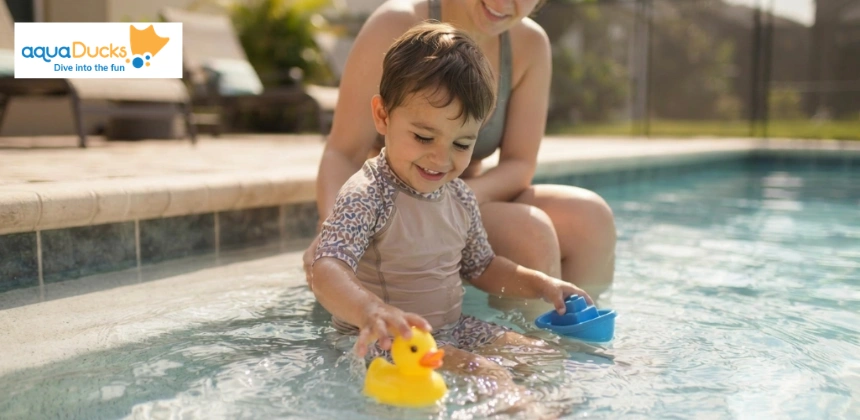
A favourite toy can make water feel familiar instead of frightening. Let your child bring a rubber duck, a boat, or even a bath-safe stuffed animal into the water with them. It gives them something comforting to focus on.
6. Talk About the Fear Without Judging It
Ask your child what worries them, and really listen to the answer. Avoid saying things like “there’s nothing to be scared of,” since that can make a child feel unheard. Instead, try something like “that sounds hard, let’s figure it out together.”
Keep the Momentum Going
Small steps add up fast when they’re noticed and encouraged.
7. Celebrate Every Small Win
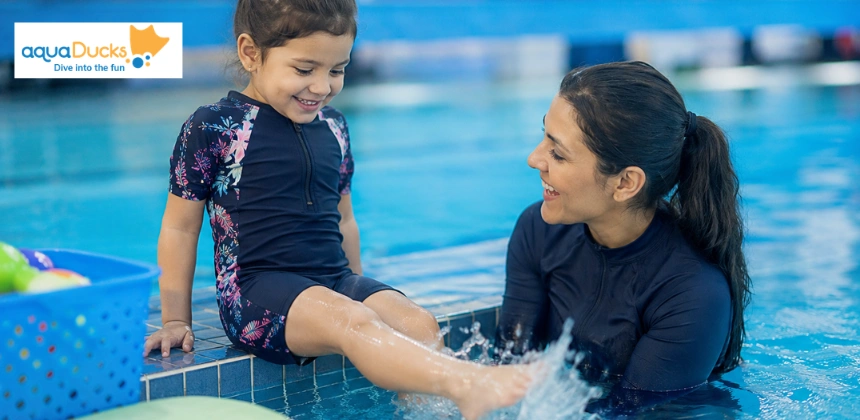
Did they put one foot in the water today? That counts. Fear doesn’t fade all at once, so notice the tiny steps just as much as the big ones.
8. Look Into Swim Lessons Made for Anxious Kids
Some swim instructors specialise in working with kids who feel nervous around water. These classes tend to move slower and focus heavily on building trust first.
If you’re looking for a program built around this approach, Aquaducks offers preschool swimming lessons and children’s swimming lessons with small class sizes and instructors who pay close attention to each child’s comfort level before introducing new skills.
9. Stick to a Regular Routine
Uncertainty makes fear grow. A predictable routine, like swim time every Saturday morning, helps your child know what to expect and slowly builds their comfort around water. As their confidence grows, our guide on how to teach a child to swim can help with the next steps.
What NOT to Do When Your Child Is Scared of Water
Knowing what helps is only half the picture. A few common habits, even well-meaning ones, can quietly make things harder.
- Don’t Set a Deadline for Progress: It’s tempting to want quick results, especially with summer trips or swim class coming up. But putting pressure on a timeline usually backfires, since fear doesn’t follow a schedule. Let your child’s comfort level lead the pace, not the calendar.
- Don’t Dismiss What They’re Feeling: Saying things like “you’re fine” or “stop being silly” can leave your child feeling embarrassed instead of heard. Even if the fear seems small to you, it feels very real to them, and brushing it off usually makes kids shut down instead of open up.
- Don’t Compare Them to Other Kids: Pointing out that a sibling or friend loves the pool usually backfires. It can make your child feel like something is wrong with them, on top of already being scared. Every child moves at a different speed, and that’s normal.
- Don’t Use the “Sink or Swim” Approach: Tossing a scared child into deep water to “get it over with” might work in old movies, but in real life, it usually makes the fear worse and harder to undo. Once that trust is gone, it takes a long time to earn back.
Signs Your Child May Need Extra Support
Most kids work through their fear of water with time, patience, and the steps above. But sometimes a little extra support makes all the difference.
If your child’s fear hasn’t budged after weeks of gentle practice, or if it’s getting worse instead of better, it may be time to bring in outside help. This is also true if the fear starts spreading beyond water, like avoiding baths altogether, panicking at the sound of running water, or showing extreme distress that doesn’t settle even with comfort. A child therapist or paediatrician can help figure out what’s really going on and guide you toward the right next steps.
It’s also worth looking into a swim instructor who specialises in working with anxious or fearful kids. These instructors are trained to move at a slower pace and build comfort before technique. If your child does better with one-on-one attention rather than a group setting, Private Swimming Lessons at Aquaducks can offer that extra layer of support.
Conclusion
Picture a child who won’t even walk near the pool without crying. Now picture that same child a few weeks later, jumping in without a second thought. This shift happens more often than parents expect.
That’s really what this comes down to: understanding why the fear started, trying a few things at home, avoiding the habits that make things harder, and knowing when it’s time to bring in outside help. Every child moves differently, and that’s okay.
If your child is still scared today, that’s not the end of the story. Try one tip from this guide this week. If you’d like a little extra support along the way, get in touch with Aquaducks, a swim school in Singapore that helps children feel safe and confident in the water at their own pace.
FAQs
1. At what age should I start helping my child get used to water?
You can start as early as a few months old, right in the bathtub. For pool exposure, many parents begin gentle splash time between ages 1 and 3, well before formal swim lessons. The earlier water feels normal and fun, the less likely fear takes root later on.
2. How long does it usually take for a child to get over their fear of water?
It depends on the child, but most kids show real progress within a few weeks of regular practice. Some warm up in days, others take a few months, and both are completely normal.
3. Is it normal for kids to cry during swim lessons?
Yes, very normal. Crying doesn’t always mean something is wrong; it can simply mean a child is tired, hungry, or adjusting to something new. A good instructor knows how to tell the difference between normal fussiness and real fear, and adjusts the lesson accordingly.
4. Is fear of water considered a phobia?
For most kids, it’s a common fear, not a diagnosed phobia. True aquaphobia, an intense, ongoing fear of water, is less common and usually needs professional support. Most children simply need time and gentle exposure to work through it.
5. Can swimming actually help reduce a child’s anxiety?
Yes. Once a child feels safe in the water, swimming can become calming rather than stressful. The rhythm of moving and breathing in water tends to settle kids down, even outside the pool.
6. What if my child was scared after a bad experience in water?
Slow things down and step away from the pool for now. Reintroduce water through low-pressure activities like bath time or a garden hose first. It takes a little longer to feel safe again after a scary moment, but most kids do get there.