
You’re standing at the edge of the pool, or maybe the water at East Coast, ready to jump in. Before you do, ask yourself one question. Do you know what actually keeps you safe once you’re in the water?
Most people assume swimming accidents happen to weak swimmers. They don’t. They happen when no one is watching closely, when there’s no lifeguard nearby, or when someone gets too confident too fast. It can happen to anyone, even strong swimmers, even you.
So, what are the 10 safety tips for swimming that can stop that from happening to you? Not long rules you’ll forget by the time you’re in the water, but simple habits you can use today, the next time you swim.
The 10 Safety Tips For Swimming You Need To Know
Here’s exactly what protects you every time you’re in the water. First up, the one habit that matters most.
1. Never Swim Alone
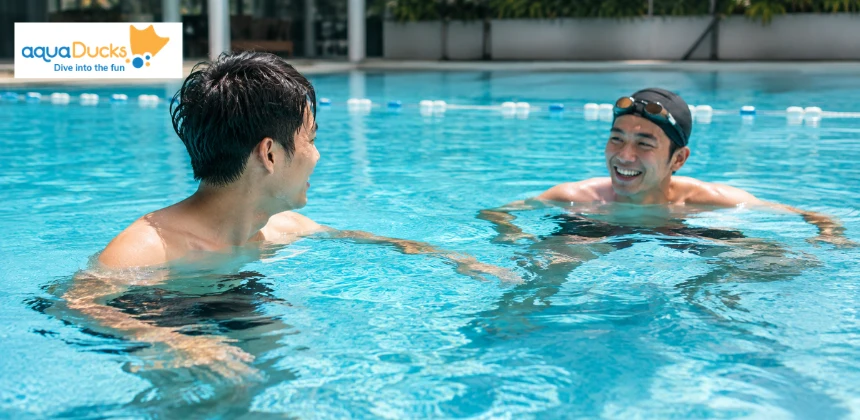
This is the simplest rule in the book, and it’s also the one most people skip. Even if you’re a strong swimmer, even if you’ve swum in that same pool a hundred times, things can go wrong fast. A cramp, a strong current, a sudden headache in the water, any of these can turn a normal swim into a dangerous one in seconds.
Having someone else with you means there’s a second pair of eyes watching, and someone who can call for help or pull you out if something goes wrong. It doesn’t have to be a lifeguard. A friend, a family member, even someone else swimming nearby who knows you’re there works just fine.
Next time you head out for a swim, don’t go alone. It’s the easiest safety habit on this list, and it might be the one that matters most.
2. Always Swim Where There’s A Lifeguard On Duty
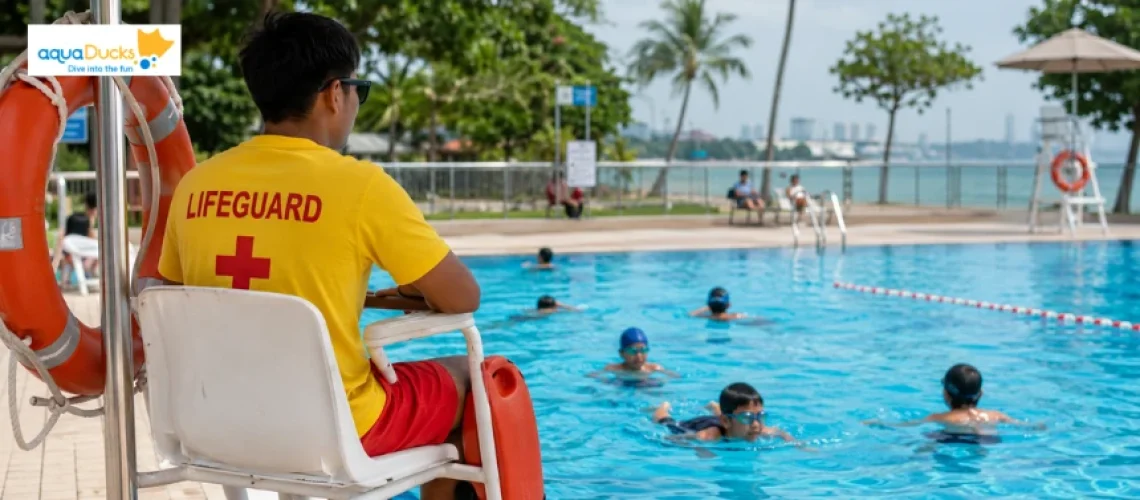
This one might be the biggest difference between a close call and a real tragedy for you. Choose pools and beaches with a lifeguard watching whenever you can. It’s often the one thing standing between someone struggling and someone actually getting help in time.
Before you jump in anywhere, take ten seconds to check. Look for someone actually on duty, not just a sign saying one exists. Your condo pool, a quiet public pool, or an empty stretch of beach might not have a lifeguard at all, especially outside peak hours.
If nobody’s watching, that doesn’t mean you can’t swim. It just means you and your buddy need to stay extra sharp, since you’re now each other’s only backup.
3. Take Real Swimming Lessons, Not Just A Few Tips From A Friend
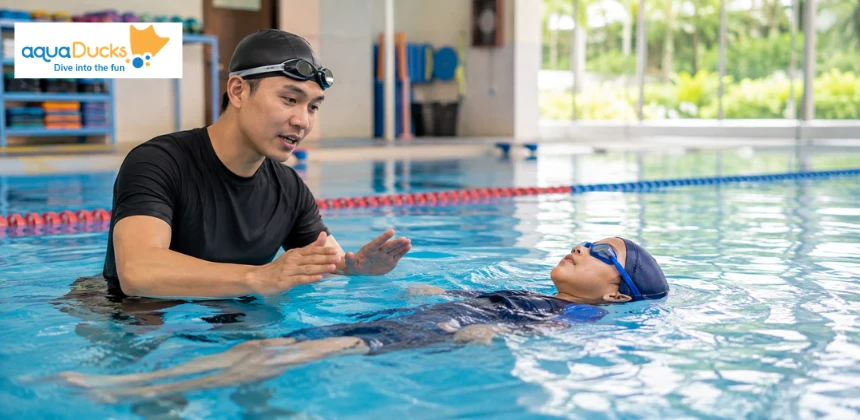
You can pick up a lot by watching videos or having a friend show you the basics. But real lessons teach you something those shortcuts usually miss, what to do the moment something feels off, not just how to move through calm water.
A proper instructor teaches you how to handle a cramp, float when you’re tired, and stay calm if a current pulls you. These aren’t skills you stumble into. Someone trained for it teaches you on purpose.
If you’re just starting out and not sure where to begin, AquaDucks offers swimming lessons in Singapore that can help you get there. It can teach you far more than strokes. It can teach you the instincts that matter most when a swim doesn’t go the way you planned.
4. Learn Basic CPR, Even If You Never Think You’ll Need It
Picture this. Someone near you goes still in the water. No lifeguard has spotted it yet. What you do in the next sixty seconds could matter more than anything else that day.
CPR isn’t complicated to learn, and you don’t need a medical background to pick up the basics. A short course, sometimes just a few hours, teaches you how to check for breathing, start chest compressions, and call for help the right way. Knowing this can turn you from a bystander into the reason someone survives.
You probably won’t ever need to use it. But if the moment comes, you’ll be glad you learned it before you needed it, not while you’re standing there trying to remember.
5. Check For Safety Features Before You Get In
Take a quick look around before you get in the water. Is there a fence keeping young kids from wandering in alone? Is there a rescue ring or pole close enough to actually reach in an emergency? These aren’t just nice touches, they’re part of basic swimming pool safety, and often the difference between help arriving fast and help arriving too late.
A lot of drowning cases happen at spots missing all of this, no fencing, no rescue gear, nothing marking where the deep end starts. You won’t always think to check, especially when you’re excited to get in. But a quick glance around costs you nothing, and it could matter more than you’d expect.
If a pool or beach looks like it’s missing the basics, notice that before you get in, not after something goes wrong.
6. Pay Attention To How You’re Feeling In The Water
Swimming feels easy, right up until it doesn’t. You might feel fine for twenty minutes, then suddenly your legs feel heavy, or a cramp grabs you when you least expect it.
Check in with yourself every so often. Are you getting tired? Are you swimming further than you meant to? Is the current pulling you somewhere you didn’t plan on going? These are easy things to miss when you’re having fun, but they’re exactly the moments that turn dangerous fast.
If something feels off, don’t wait it out. Stop, float, or head back in before it becomes a real problem.
7. Learn To Float Before You Try To Swim Far
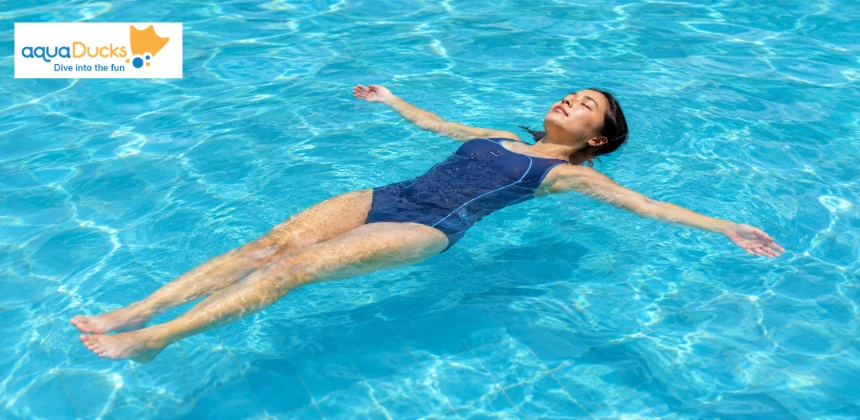
If you can float, you can survive almost anything the water throws at you. Tired legs, a cramp, a moment of panic, none of it matters as much if you know how to just lie back and let the water hold you up.
It sounds too simple to matter, but it’s one of the most overlooked skills out there. People spend hours learning strokes and speed, then never practice the one skill that actually keeps them going when things get hard. Floating buys you time. Time to catch your breath, time to call out, time to wait for help to reach you.
Next time you’re in the pool, spend two minutes practising it. Lie back, relax your body, let your ears sink under. It’s easy to skip, but it’s the one skill you’ll be glad you didn’t.
8. Know The Rules Before You Break Them By Accident
Every pool and beach has rules, and most people never actually read them. No diving in the shallow end. No running on wet tiles. Stay within the flagged area at the beach, not past it. These swimming pool safety guidelines can feel like small print nobody bothers with, but each one exists because someone got hurt before you got there.
Take a minute to actually look, whether it’s a sign at the entrance or an instruction given before you get in. Rules change from place to place too. What’s fine at one pool might be exactly what gets you hurt at another.
Following them isn’t about being cautious for no reason. It’s about not repeating a mistake someone already paid for.
9. Use The Right Gear, Not Just Whatever Floats
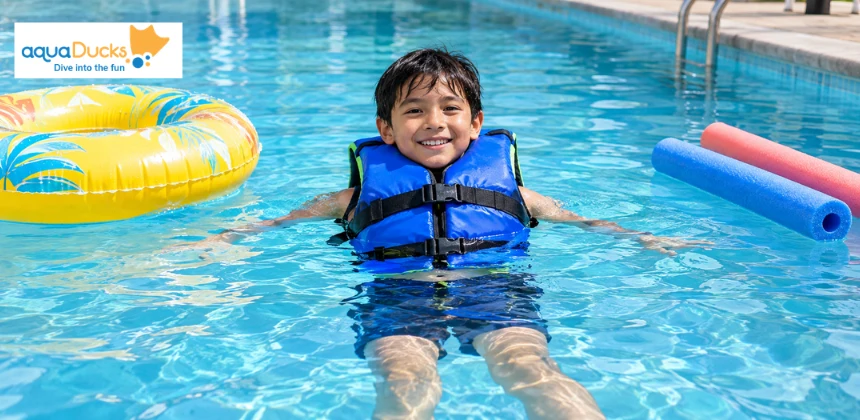
A pool noodle or an inflatable ring is great for fun, but it’s not built to keep you safe. Those toys can slip out from under you, flip over, or get swept away in strong water. If you’re relying on one to stay afloat, you’re trusting something made for play, not protection.
If you actually need help staying up, whether you’re a new swimmer or heading somewhere deeper, use a proper life jacket instead. It’s built to keep you face up, even if you’re tired or can’t move well. A pool toy can’t promise you that.
Know the difference before you choose your gear, so you’re not finding out the hard way mid-swim.
10. Know What To Do If You Ever Get Into Trouble
Panic can make a difficult situation in the water much harder to manage. The moment you start thrashing and fighting it, you tire out fast and make everything worse. The water isn’t trying to hurt you. Your own fear is usually what does the damage.
If you ever feel yourself struggling, stop fighting it. Roll onto your back, spread your arms, and float. Wave one arm high and call out, loud and clear, so anyone nearby actually notices you. Save your energy for staying afloat, not for swimming against something stronger than you.
This is the one tip that ties every other tip together. A buddy nearby, someone watching the water, gear that actually works, all of it exists so that if this moment ever comes, you’re not facing it alone.
If panic tends to hit you hard, practising your breathing technique beforehand can help you stay in control when it counts.
Why Swimming Safety Matters More In Singapore Than You Think
Singapore might feel like one of the safest places to swim, and in a lot of ways, it is. But swimming here isn’t occasional, it’s part of daily life. Condo pools, public pools, beaches like East Coast and Sentosa, water is everywhere you look, which means the odds of an accident add up simply because so many people are in it, so often.
That risk isn’t unique to Singapore either. The World Health Organisation estimates around 300,000 drowning deaths worldwide each year, a scale most people don’t realise until they see the number written out. It’s common enough that global health bodies track it as a serious, preventable problem, not just an occasional headline.
Most drowning cases here happen in ordinary places, not dramatic ones. A quiet condo pool on a weekday afternoon. A shallow stretch of beach that looked calm five minutes earlier. Strong swimmers are involved just as often as weak ones, because the danger was never really about skill in the first place, it was about a small window where nothing was in place to catch a mistake.
None of this is meant to scare you out of the water. It’s meant to help you enjoy it the way it’s meant to be enjoyed, with a little more awareness, and a lot less risk.
Why Swimming Lessons Matter More Than Any Tip On This List
Every tip on this list works better with one thing underneath it, real water confidence. You can know the rules, check for a lifeguard, and float like a pro on paper, but none of it sinks in the same way until you’ve actually practised it in the water, with someone guiding you through it.
That’s the real value of proper swim lessons. They don’t just teach strokes. They build the instincts this whole list depends on, staying calm when something feels off, knowing your limits, reacting instead of freezing. Those are things you learn by doing, not by reading a list, even a good one.
If you’ve been meaning to get back in the water, or you’re just starting out, AquaDucks offers swimming programmes for different ages and ability levels, with proper guidance to build those skills at your own pace. A trial lesson is a low-pressure way to see where you stand. No pressure to sign up for anything, just a chance to build the skills that actually keep you safe.
Conclusion
None of these ten habits is complicated. A buddy by your side, a lifeguard watching, a little awareness of how you’re feeling, put them together and a normal swim stays a normal swim. You don’t need to overthink the water. You just need to respect it.
Next time you’re standing at the water’s edge, maybe back at East Coast Park, you won’t be guessing anymore. You’ll know what to check, what to watch for, and what to do if something feels off.
Reading about these habits is one thing. Practising them with someone guiding you is another. AquaDucks has been doing that since 1989, and their adult and learn-to-swim programmes focus on exactly what this list covers, staying calm, staying aware, and knowing how to handle the water on your worst day, not just your best one, in heated, salt-chlorinated pools across Singapore.
Book a trial lesson and turn what you just read into something your body actually knows how to do.
FAQs
Is it safe to swim after drinking alcohol?
No. Alcohol slows your reaction time, affects your balance, and makes it harder for your body to judge distance and danger in the water. It’s a known risk factor in drowning cases around the world, so it’s best to save the drinks for after you’re out of the pool.
Should I avoid swimming during a thunderstorm?
Yes, always. Lightning doesn’t need to strike the water directly to be dangerous, pool decks, metal railings, and ladders can conduct electricity too, putting anyone nearby at risk. If you hear thunder or see dark clouds rolling in, get out of the water and away from the poolside until it passes.
Do I need to check the water depth before jumping in?
Yes, every time, even in pools you’ve swum in before. Water that looks deep can be shallower than it seems, especially in unfamiliar spots like reservoirs or beaches. Always check depth markers, or ease in slowly if there aren’t any.
How long should I wait after eating before swimming?
There’s no strict rule here, the old idea of waiting hours isn’t necessary. That said, jumping in right after a big meal can leave you feeling sluggish or crampy, so most people find a short break before swimming more comfortable. Listen to your body rather than a fixed number.
Should I warm up before swimming?
It helps more than people think. A few minutes of light stretching or arm circles get your muscles ready and lower your chances of cramping once you’re in the water. It also gives your body a moment to adjust instead of diving in cold.