
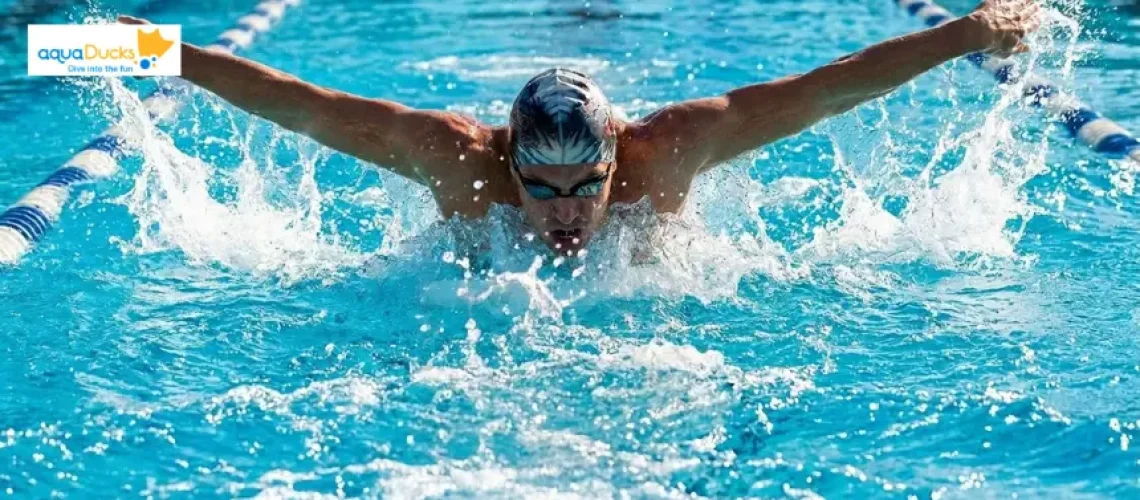
The butterfly stroke is one of the most challenging swimming styles because it requires strong timing, breathing control, and full-body coordination. Many swimmers feel tired quickly during their first few attempts, especially when the rhythm is not yet smooth.
Even though butterfly can feel difficult at the beginning, it is also one of the most rewarding strokes to learn. It helps improve strength, endurance, coordination, and overall water control. Many swimmers learn butterfly through school programs, fitness training, or private swimming lessons.
Beginners do not need to master everything at once. By practising step by step and focusing on proper technique, the butterfly becomes smoother, easier, and more comfortable over time.
Why Butterfly Feels Difficult for Beginners
Many learners find the butterfly challenging because it requires full-body coordination, strong breathing control, and proper timing between the arms and legs. Unlike freestyle, butterfly uses more energy and can feel tiring very quickly when the flow is incorrect. This is why many swimmers enrol in Swimming Lessons in Singapore to build the right foundation from the start.
What Is Butterfly Stroke?
Butterfly stroke swimming is a style in which both arms move together while the legs perform a dolphin kick. The body moves in a smooth wave-like motion through the water.
Unlike freestyle or breaststroke, butterfly requires stronger timing between the arms, legs, and breathing. This is why many beginners find it harder to learn in the beginning.
Butterfly is commonly used in competitive swimming, but many people also practise it for fitness and skill improvement. It is known for being a full-body workout because it uses the shoulders, back, chest, core, and legs together.
Step-by-Step Guide to Butterfly Swimming Technique for Beginners
Learning butterfly becomes easier when each movement is practised separately before combining the full stroke. Beginners who have completed learn-to-swim lessons will find this step-by-step approach much more manageable.
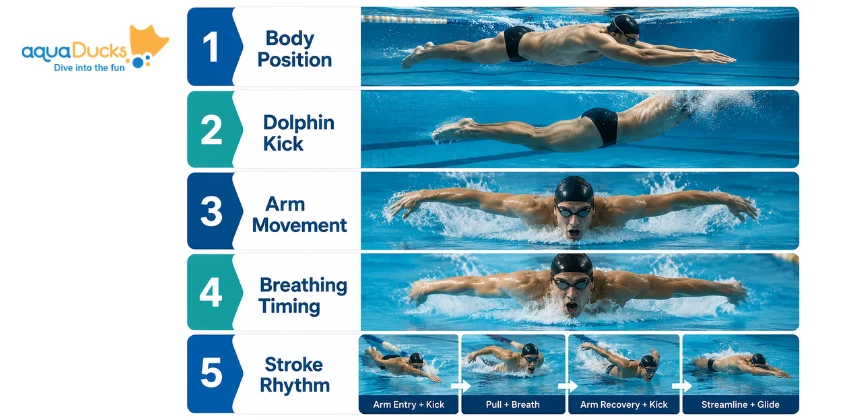
Step 1: Body Position
Good body position helps swimmers move more smoothly through the water. In a butterfly, the body should stay close to the water surface with a relaxed posture.
Your chest and hips should move naturally in a gentle wave motion. Avoid keeping the body stiff because this creates more resistance.
Simple Tips for Better Body Position
- Keep your head facing slightly forward and down
- Stay relaxed in the water
- Keep your hips near the surface
- Let the movement flow through the body naturally
A balanced body position helps reduce tiredness and improve rhythm.
Step 2: Dolphin Kick
The dolphin kick is one of the most important parts of the butterfly stroke. Both legs stay together and move in a smooth kicking motion.
The movement should start from the chest and hips instead of only the knees. Many learners kick too hard, which wastes energy and breaks the coordination.
How to Improve Dolphin Kick
- Keep your legs together
- Point your toes
- Use small controlled kicks
- Move from the hips and core
Practising dolphin kicks with a kickboard can help beginners feel more comfortable with the movement.
Step 3: Arm Movement
In a butterfly, both arms move together at the same time. The arms enter the water in front of the shoulders, pull backwards through the water, then recover over the surface before repeating the movement again.
Try to keep the movement smooth and relaxed instead of rushing.
How Butterfly Arm Movement Works
- Hands enter the water
- Pull the water backwards
- Push through the hips
- Recover arms over the water
Many beginners become tired because they use too much strength during the arm pull. Focus on technique before speed.
Step 4: Breathing Timing
Breathing is one of the hardest parts of the butterfly for beginners. Good breathing timing helps swimmers maintain rhythm and avoid exhaustion.
Most swimmers breathe when their arms pull through the water. The head lifts slightly forward for a quick breath before returning to the water.
Breathing Tips for Beginners
- Keep the breath quick and relaxed
- Lift the chin only slightly
- Exhale underwater
- Avoid lifting the whole head too high
Poor breathing timing can make the butterfly feel much harder than it actually is.
Step 5: Stroke Rhythm
Butterfly works best when all movements flow together smoothly. The body position, kicks, arms, and breathing should feel connected. Many swimming coaches encourage beginners to focus on rhythm first instead of speed.
A common beginner rhythm includes:
- One kick during arm entry
- One kick during arm recovery
Once the rhythm improves, the stroke becomes smoother and less tiring.
Best Drills to Improve Butterfly Stroke
Drills are very helpful in butterfly swimming because they let you focus on one skill at a time instead of trying to fix everything together. This makes learning easier and faster.
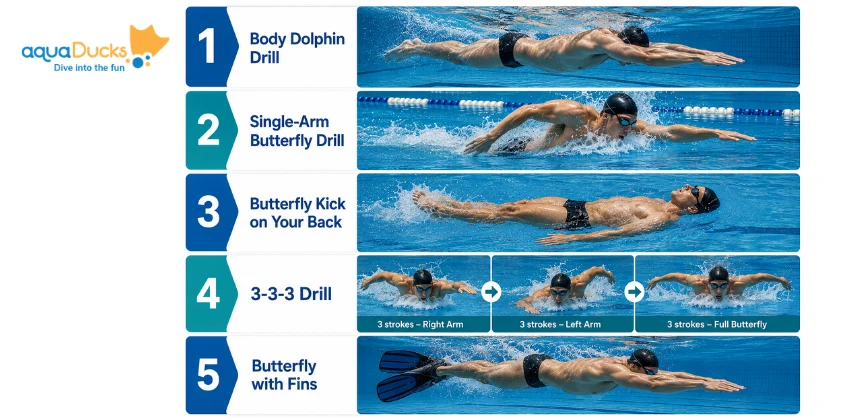
1. Body Dolphin Drill
This drill helps you learn the main “wave” movement of the butterfly. You move your body like a dolphin from your chest through your hips and legs without using your arms. It teaches smooth flow and better body control in the water.
2. Single-Arm Butterfly Drill
In this drill, you swim butterfly using only one arm while the other stays stretched forward. It helps you focus on smooth arm movement, better body balance, and proper breathing timing. You also learn how to keep your stroke controlled without rushing. It’s great for fixing coordination issues.
3. Butterfly Kick on Your Back
You lie on your back and perform dolphin kicks while keeping your body relaxed and straight. This drill strengthens your core and improves kick efficiency and flexibility. It also helps you feel the natural wave motion of a butterfly without using your arms. It’s useful for building kick power and body control.
4. 3-3-3 Drill
This drill builds coordination step by step:
- 3 strokes using the right arm
- 3 strokes using the left arm
- 3 full butterfly strokes
It helps you connect each part of the stroke smoothly and improves timing.
5. Butterfly with Fins
Using swim fins helps you move through the water more easily and reduces tiredness. It lets you focus on correct body movement and kick technique. Fins also help you build a stronger and more consistent dolphin kick.
Common Butterfly Mistakes
- Lifting the head too high: This pushes the hips down and makes swimming harder. Keep your head low and only lift slightly to breathe.
- Kicking only from the knees: Butterfly kick should come from the hips, not just the knees. Using only knees reduces power and balance.
- Using too much strength: Swimming hard does not help at the start. Smooth and relaxed movement is more important than speed.
- Holding your breath: This makes you tired quickly. Breathe naturally and exhale underwater to stay relaxed.
- Poor timing between arms and legs: When movements are not in sync, the stroke becomes difficult. Slow practice helps improve coordination.
Many swimmers struggle with the butterfly because of a few common mistakes. Catching them early with a coach in private swimming lessons makes a big difference.
How to Practice Butterfly Without Getting Tired
Many beginners who are still learning how to swim feel exhausted after practising butterfly for only a short time. This is normal in the early learning stage. The best way to improve endurance is by focusing on efficiency instead of power.
Helpful Tips
- Swim short distances first
- Focus on smooth movement
- Relax the shoulders during recovery
- Practise drills regularly
- Take short rest breaks between laps
Swimming butterfly with good flow usually uses less energy than forcing the stroke with strength.
Tips for Beginners in Singapore Pools
- Public pools offer more lane space, so you can practise full butterfly strokes without interruption
- Condo pools are quieter and work better for drills and technique focus
- Weekday mornings and early afternoons are the least crowded, giving you more lane space
- Schedule sessions in the early morning or after 5 pm and always drink water before and after swimming
- Always swim on the left side of the lane and let faster swimmers pass
- Taking a structured swimming programme with an experienced coach helps fix mistakes early
Conclusion
The butterfly stroke may feel challenging at the beginning, but every swimmer improves with the right technique and consistent practice. Once you start focusing on smooth body movement, proper breathing, and correct timing, the stroke becomes much more controlled and less tiring.
Progress in butterfly doesn’t come from strength alone; it comes from rhythm, patience, and staying relaxed in the water. With small, steady improvements in each practice session, beginners gradually build confidence and efficiency.
Over time, what once felt difficult turns into one of the most powerful and satisfying strokes to swim.
FAQs
1. Is butterfly harder than freestyle?
Yes. Butterfly is harder than freestyle because it needs strong timing between arms, legs, and breathing. It also uses more energy, so beginners can get tired quickly. However, with regular practice and good technique, it becomes easier and more controlled over time.
2. Can beginners learn the butterfly stroke?
Yes, they can learn the butterfly stroke by practising one step at a time instead of trying to master the full stroke immediately. Starting with dolphin kicks and basic arm movement often helps build confidence.
3. Why do I sink during the butterfly?
Many beginners sink because they lift their head too high or lose rhythm while breathing. Poor timing between the kick and arm movement can also make the hips and legs drop. Staying relaxed and keeping the body close to the water surface helps maintain better balance.
4. How many kicks are used in the butterfly stroke?
Most swimmers use two dolphin kicks during one complete butterfly arm cycle. The first kick usually happens when the arms enter the water, while the second kick happens during the arm recovery phase. This timing helps swimmers maintain better flow and forward movement.
5. Is butterfly good exercise?
Yes. Butterfly is a powerful full-body workout that uses your arms, core, chest, back, and legs together. It helps build strength, improve coordination, and increase stamina. It is also effective for burning calories and improving overall fitness.